
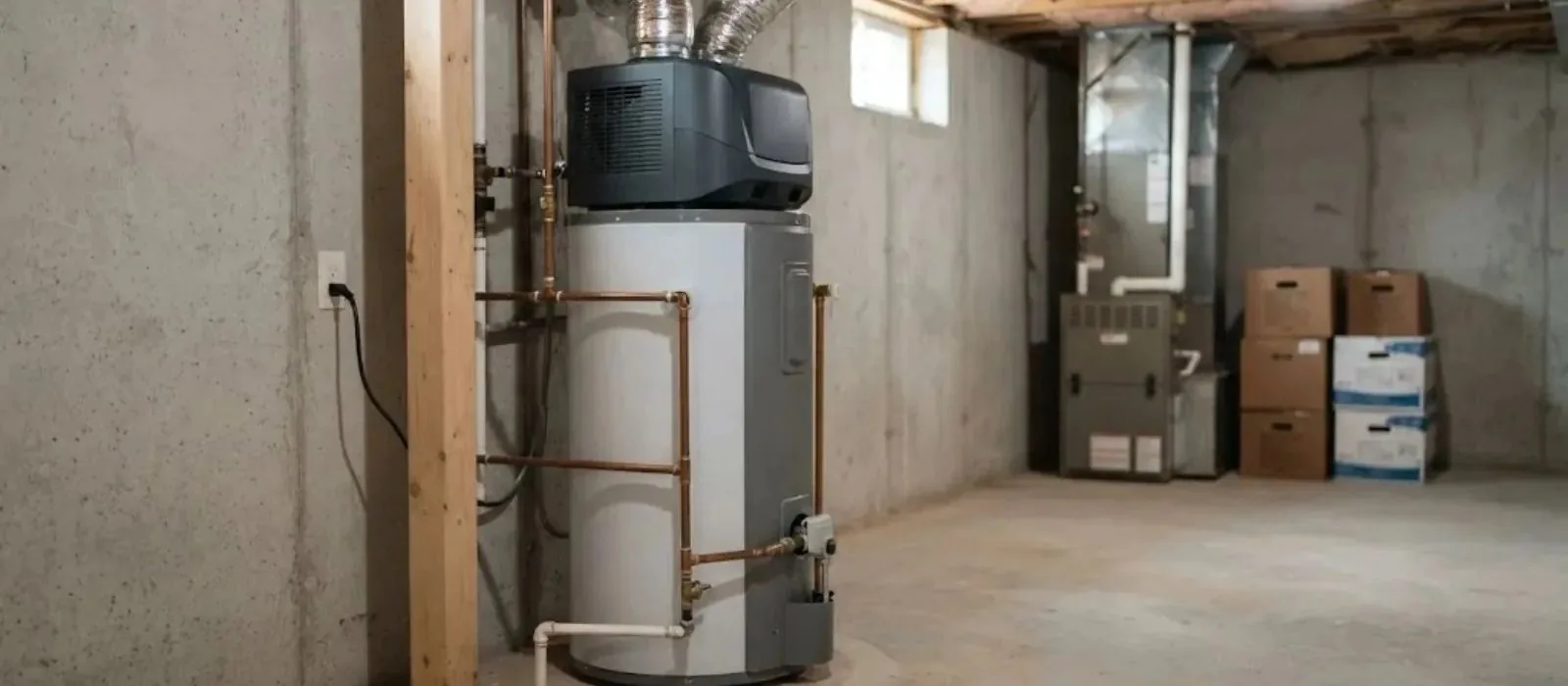
A tank that has failed: what happens next
.Water heater replacement in Chanhassen is rarely a planned weekend project. More often the tank has begun to weep at the base, the hot water has gone, or someone found a spreading puddle after work. The line is open 24/7 for exactly that moment.
Replacement means removing the old tank and fitting a new heater with new connectors, a new relief valve and a discharge line that meets code. It is more than a swap of two boxes. The water, gas or electric, venting and drain details all get reviewed.
Until a plumber arrives, close the cold water valve at the top of the tank, switch off the breaker or turn the gas control to off, and keep the floor as dry as you can. Smell gas, and everyone leaves the house and calls the gas utility or 911 before anything else.
Five signs the tank is done
.- Water collects at the base of the tank and the shutoff and fittings above are dry.
- Hot water looks rusty or tastes of metal while cold water runs clear.
- The data plate shows a manufacture date well beyond a decade ago.
- You have paid for two or three repairs in a short span, and each fix buys less time.
- The tank groans or pops loudly and hot water runs out faster than it used to.
Any one of these deserves attention. Leaking from the tank body is the one that ends the debate, because a rusted liner cannot be patched. If your problem is a part instead, a heater repair visit may restore it for less than a new unit.
Choosing the type: gas, electric, heat pump or tankless
.The decision starts with what you have now and what the house can support. Switching fuels changes gas piping, venting and electrical load, so it widens the scope of the job.
| Type | Fuel and venting | Space and household fit | Watch for |
|---|---|---|---|
| Gas tank. | Natural gas or propane with a vent to the outside. | Fits most basements, handles busy mornings. | Venting and combustion air. |
| Electric tank. | Dedicated circuit, no vent. | Simple placement, steady output. | Panel capacity and recovery time. |
| Heat pump or hybrid. | Electric with a compressor, condensate drain. | Needs open air space and headroom. | Cool air output and noise. |
| Tankless. | Gas with special venting or high-amp electric. | Saves floor space, supplies steady flow. | Flow limits and descaling needs. |
People who want endless flow often look at tankless units, which need a flush routine in hard water. Heat pump models come with their own incentive programs. Those programs shift year to year, so check current utility and federal listings instead of relying on an old brochure.
Sizing for the people in your house
.A heater that is too small leaves the last person in the shower cold. One that is too large wastes energy keeping extra water hot. Tank size should reflect how many people live in the house, how many bathrooms run at once and whether big soaking tubs are in the mix.
A plumber will ask about household size, peak morning use and any large fixtures. Tank models list a first-hour rating that tells you how much hot water they deliver in the first sixty minutes, which is often more useful than the gallon number. Matching that rating to your busiest hour keeps everyone warm.
Describe the tank, its age and the leak to dispatch. A licensed plumber can say honestly whether replacement makes sense today.
Venting, combustion air and gas connections
.A gas heater needs to exhaust combustion gases outdoors and draw in enough fresh air to burn properly. Old flue pipes can rust, sag or leave gaps. A replacement is the time to inspect them, not to ignore them.
The new unit also needs a gas shutoff within reach, a drip leg or sediment trap, and a connector in good condition. If your vent runs through a masonry chimney that has not been checked in years, the plumber may recommend a liner or a different venting method. Anything that looks like carbon monoxide risk gets stopped on the spot. Install a working CO alarm near the sleeping areas if you do not have one.
Code items you can expect to see
.On a swap, the checklist comes from chapter 4714 of the Minnesota Rules, which took effect in December 2021 as the state's plumbing code. For a heater, that typically touches the relief valve and its discharge pipe, a drain pan where a leak would cause damage, correct support and connections, and an expansion tank where the system calls for one.
Most items on a swap checklist trace back to the Uniform Plumbing Code (UPC) that underlies the Minnesota code, from the relief valve and its discharge pipe to an expansion tank where a closed system calls for one. Inspectors generally look at those on the finished job. Your plumber confirms which apply to your house.
A tank swap may or may not need a permit depending on scope, so city inspectors can answer for your address. Licensed contractors, or people working under them, must do the plumbing, and the state's online license lookup confirms a name in moments.
Hard water and the life of the new tank
.Chanhassen's city water comes from deep wells, loses its iron and manganese in treatment, and stays hard. The city rates its supply at about 21 grains, which is hard, and staff say most residents benefit from a softener. For a new heater, that is a practical warning. Scale builds up under the burner or around the elements, the tank works harder, and its life gets shorter.
A softener ahead of the heater cuts that scaling. If you are curious, softener and filtration choices are worth a look at the same visit. Without a softener, plan to flush the tank on a regular schedule and have the anode rod checked.
Replacement day, step by step
.Walk-through
The plumber looks at the old tank, the shutoff valves, the venting and the space around it.
Shut down and drain
Water, gas or power is isolated, and the tank is emptied to a floor drain or outdoors.
Remove the old unit
The tank is disconnected and carried out, and the area is cleared.
Set and connect
The new heater goes in place with fresh connectors, a relief valve, a discharge line and any pan or expansion tank.
Fire up and test
Power or gas is restored, the unit heats, and every joint is checked for weeping.
For a heater moving to a new spot or an entirely new fuel, see our page on water heater installation for the planning side. In the middle of an emergency, the goal is simple: stop the damage, get the right unit sized, and get hot water back.
When a failed heater is an emergency
.Pick up the phone right away if the tank is pouring water, the relief valve will not stop venting, or the room smells of gas. Call the same day if the heater is completely cold in winter and the household has babies, elderly residents or anyone medically dependent on hot water. A cold tank in a spare room can wait for daytime.
Before We Arrive
.Small steps now can keep a bad morning from getting worse.
What decides the cost of a replacement
.Two houses with the same tank size can get very different quotes. These are the pieces that move the number, and the figure is given before the old tank is touched.
A sudden tank failure that floods the home is often covered under the water damage part of a homeowner policy. The heater itself usually is not. Photograph the damage and ask your insurer what it needs.
Give dispatch the tank size, fuel and location for a number that fits your house. A licensed and insured plumber can walk you through the choices.
Replacement questions we hear from Minnesota homeowners
.Tank-style heaters often run for roughly a decade, give or take, depending on water quality, maintenance and usage. Tankless units tend to last longer when they are flushed on schedule.
The data plate on the side lists the manufacture date in a code, and the manufacturer's site can decode it. Age alone is not a verdict, but age plus a wet base is.
Often, yes, when a like-for-like unit is available and the venting, gas and electrical connections are in good shape. A different fuel type, a new location or a code upgrade can stretch the job. Call the 24/7 line, describe the setup and ask what is realistic for your home.
Yes. Dispatch runs 24/7 from Chanhassen. If the tank is flooding, close the cold supply valve and cut power or gas, then call. A plumber can often stabilize the situation first and discuss the replacement unit once the water is stopped.
If the heater is only cold and not leaking, you may be able to schedule a calmer daytime install.
It depends on your fuel costs, your electrical panel capacity and the room. A heat pump water heater pulls heat from surrounding air, needs open space and cools that space slightly. It also drains condensate that has to go somewhere.
Rebates and tax incentives for electrification change over time. Check current utility and federal programs directly instead of relying on a figure from a web page.
An expansion tank absorbs the extra volume that heated water creates when your plumbing system is closed, for example by a backflow device or a pressure reducing valve. Many installs call for one where the code or the manufacturer requires it. The plumber checks your system and tells you whether yours does.
The installer drains it, disconnects it and carries it out. Scrap metal recycling is the usual route for a steel tank. Ask before the job starts so you know it is included in the work.
It can. Water softened before it reaches the heater leaves much less scale on the tank bottom and heating surfaces. In Chanhassen the municipal supply is listed as hard and arrives unsoftened, so a softener upstream can shield the new tank from scale.
Ask dispatch about a same-day install slot, and know the line stays open overnight if the tank is already leaking.