
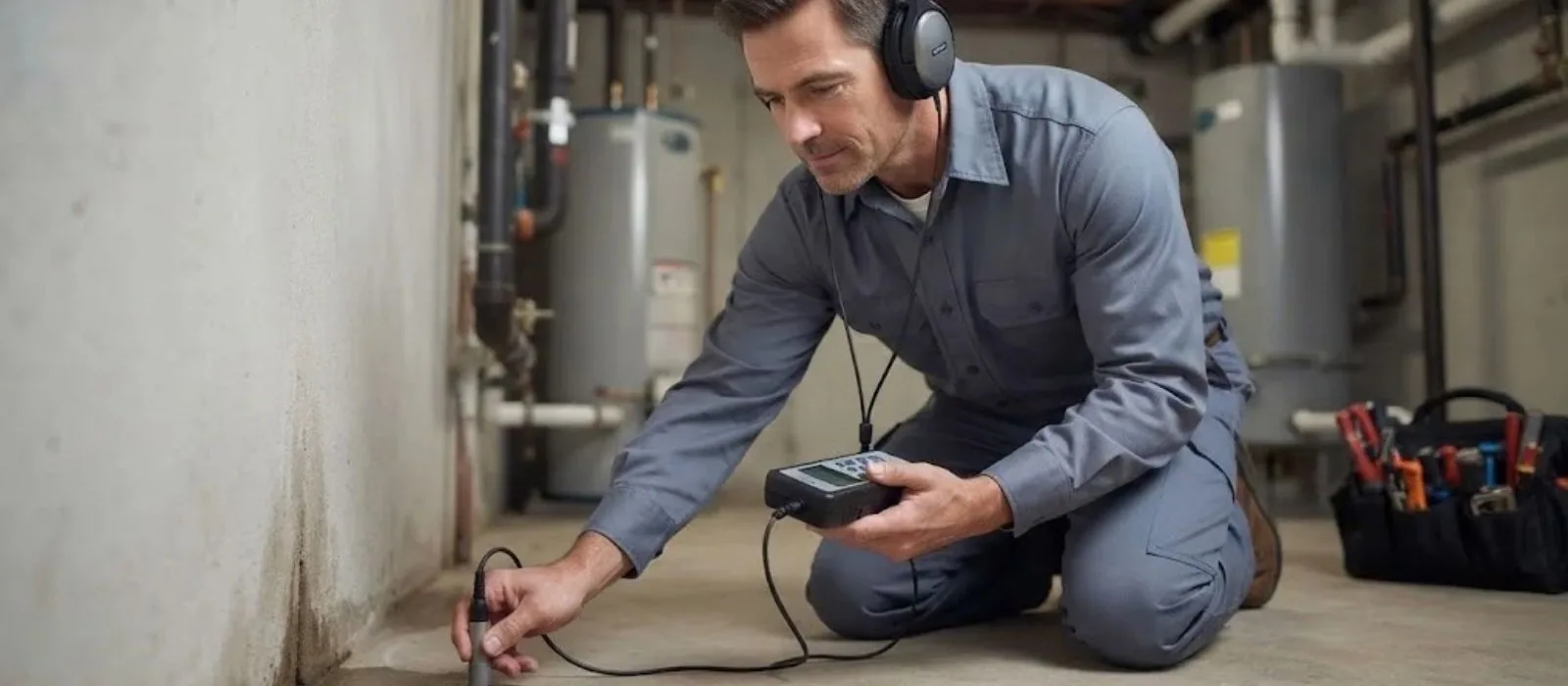
Leak detection in Chanhassen starts with what you can see and hear
.Leak detection in Chanhassen means locating the exact spot where water is escaping before anyone opens a wall, cuts a slab or digs up a yard. The signs are often small. A meter dial that creeps with every tap closed, a water bill that jumped, a floor that feels warm underfoot, a ceiling stain that grows after a shower, or the faint hiss of running water in a quiet house.
If water is actively soaking drywall or pooling near the electrical panel, treat it as urgent. Dispatch is open 24/7. Until a plumber arrives, close the main shutoff valve, stay away from wet outlets and appliances, and take photos of everything before you move anything.
Most callers are not sure whether they have a leak at all. That is a fair place to start. A good diagnostic visit sorts the question into steps: confirm that water is being lost, narrow down which part of the system is losing it, then pinpoint the spot so the repair is small and targeted.
- A water meter that moves when every fixture in the house is off.
- A bill that climbs with no change in how many people live in the home.
- Warm patches on a floor, or a hot spot that never cools.
- A damp, discolored or bubbling spot on a ceiling, wall or attic floor.
- The sound of running water when nothing is on.
- Pressure that has slowly faded at every faucet.
- Soft, green or unusually wet ground between the street and the house.
Reading your water meter and your bill
.The meter is the most honest witness in the house. Turn off every faucet, the dishwasher, the washer and the ice maker, then look at the meter. Most have a small low-flow dial or a triangle or wheel that spins when even a trickle passes through. If it moves with everything off, water is going somewhere.
Before blaming a pipe, check the toilets. Put a few drops of food coloring in each tank, wait 15 minutes without flushing, and look in the bowl. Color that shows up means the flapper isn't sealing. The city page puts local well water near 21 grains per gallon of hardness, so mineral crust on a flapper seat is a common reason a toilet leaks silently. Cleaning or replacing the flapper ends many high-bill mysteries.
If the meter keeps moving after the toilets are ruled out, the loss is in a supply line, a fixture, a water heater connection or the buried pipe. A bill that doesn't match your meter reading is a separate matter. Chanhassen's water comes from city wells, so ask the city billing office to confirm the meter reads and the billing period before you assume the leak is yours.
Wet ceilings, damp walls and attic stains
.Water rarely drips straight down from its source. It follows a joist, a pipe or the back of a drywall sheet until it finds a low or soft spot, so the stain you see can sit several feet from the actual leak. A ceiling stain below a bathroom might be a tub overflow seal, a shower valve, a supply joint or a drain slip nut.
A stain that shows up only when someone showers points to the drain side of that fixture. A stain that appears on its own, day and night, usually points to a pressurized supply line. A ring that dries and returns after cold snaps can be a roof or condensation problem instead, and that is not a plumber's repair. An honest detection visit says so when the water isn't coming from a pipe.
If the ceiling is sagging or bulging, don't poke it. Water trapped behind drywall can release all at once. Place a bucket, keep people clear and call. A small relief hole is sometimes the safest way to drain a bulge, but that is best done with someone watching for electrical hazards.
Slab, basement and crawl space leaks
.Most Chanhassen homes went up after the city formed in 1967, which means many have basements and a good share sit on slab-on-grade foundations. Both hide pipes. A hot water line buried in a slab can leak for months without a stain, and the first clue is often a warm floor, a hot spot that appears in winter, or a heating bill that creeps up because the water heater keeps running.
Under a basement floor or inside a crawl space, the clues are different: damp insulation, musty air, efflorescence on masonry, or a sump pit that cycles more than the weather explains. Not every wet basement is a plumbing leak. Groundwater seepage, window wells and wall cracks look similar, so the first job is separating pipe water from ground water. If the answer is ground water, basement waterproofing is the right conversation instead.
For slab leaks, pinpointing matters more than anything. Cutting concrete in the wrong place is expensive and messy. Sometimes the better call is rerouting a failing line through the attic or walls. If the same slab has had several leaks, repiping the affected lines can cost less over time than chasing each one.
Buried service-line leaks and the 811 rule
.The water service line runs underground from the street connection to the house. When it leaks, the signs are a wet or sunken patch in the yard, grass that stays greener than the rest, and a meter that keeps turning once the house is shut down. In winter, look for open water or ice where none belongs. Low pressure through the whole house can also point to a failing line.
Finding the leak is only half the story, because the fix is generally measured against the code. The Uniform Plumbing Code (UPC) that informs Minnesota's rules covers approved materials and joining methods for water piping. Your plumber can explain which of those rules touch your repair.
Detection here relies on listening and mapping. Once a leak is located, the repair means digging. Call 811 (Gopher State One Call) before any excavation so buried utilities are marked first. That applies to a plumber's trench and to a homeowner's shovel alike. The line itself is covered on its own page under water service line repair.
Irrigation lines in a freeze climate
.Minnesota irrigation systems are drained or blown out each fall so water doesn't freeze and split the lines, valves and backflow device. When the system is started in spring, that is when winter damage shows up. Common finds are a cracked backflow assembly, a split lateral that floods one zone, or a valve box full of water that never drains.
Signs of an irrigation leak include a zone with weak spray heads, a patch of lawn that stays wet the day after watering, or a meter that runs when the controller is off. A pressure test on the irrigation branch, with the zones isolated one at a time, tells you whether to look at the pipe, the valve or the heads. Irrigation work and backflow testing can involve rules of their own, so ask which parts a plumber covers.
Pools, spas, yard faucets and curb boxes
.A pool or spa that loses more than evaporation explains may have a leak in the plumbing loop, the skimmer, a fitting or the shell itself. Plumbers can pressure-test the supply and return lines. Liner and shell repairs belong to a pool contractor, so expect an honest split of responsibility.
Yard leaks tend to be simpler. A hose bib that drips inside the wall, a frost-free sillcock with a failed washer or a curb box lid that stays wet are all findable. A bib that was left connected to a hose over winter can split inside the wall, and you won't know until spring when the leak shows inside the house.
How a detection visit actually finds the leak
.No single tool finds every leak, and anyone who claims otherwise is selling something. Detection visits usually combine several methods, picked to match the symptom and the pipe material.
- Pressure testing: isolating a line, pressurizing it and watching for a drop, which proves a leak exists on that section.
- Acoustic listening: sensitive microphones on floors, walls or valves that pick up the sound of water escaping a pressurized pipe.
- Thermal imaging: a camera that shows temperature differences, useful for hot water lines and radiant heat tubing.
- Tracer gas: a harmless gas mix pushed through the pipe that is sniffed out at the surface where it escapes.
- Camera inspection: a small camera run down a drain or into a cavity when the suspect is a drain line, not a supply line.
Ask which method fits your situation and why. Acoustic gear works well on metal supply lines and poorly on plastic or in a noisy street. Thermal imaging needs a temperature difference to read. Every method has limits, and sometimes the answer is a process of elimination that closes one section at a time.
| What you notice | Likely source | First check |
|---|---|---|
| Meter moves with everything off. | Toilet, supply line, water heater connection or buried line. | Dye test the toilets, then close the main and watch the dial. |
| Sudden bill increase. | Running toilet, irrigation, hidden supply leak. | Compare meter reads, ask the city billing office to confirm. |
| Stain on a ceiling below a bath. | Shower valve, tub drain seal, supply joint. | Run the shower alone and watch the stain, shut the main if it grows. |
| Warm spot on the floor. | Hot water line under slab or radiant tubing. | Turn off the water heater supply and see whether the warmth fades. |
| Wet ground outdoors. | Service line, irrigation lateral, hose bib. | Call 811 before any digging, then close the main and re-check. |
| Running water sound at night. | Failing fill valve, supply leak inside a wall. | Listen at the main valve, then at each fixture in turn. |
| Pressure fading house-wide. | Service line, regulator, corroded piping. | Test with a gauge on a hose bib before and after closing irrigation. |
Tell dispatch what the meter, the stain or the sound is doing. A licensed plumber will point you to the right test and book a visit, with the price stated up front.
What shapes the cost of finding a leak
.Detection is priced by the effort needed to reach a confident answer, not by a flat rule. Someone should explain the plan and the likely path before work starts.
Coverage usually follows the water, not the pipe: a policy may pay for damage from a sudden release yet leave out the cost of locating and repairing the failed line. Access costs for the search are treated differently from one policy to the next, so check with your agent before booking.
For a number that fits your house, ring the 24/7 line and describe what you're seeing. Dispatch can explain what a first visit would involve.
When a hidden leak is an emergency
.Most slow leaks can wait for a daytime visit. Some can't. Water running through a ceiling light fixture, water reaching an outlet or the electrical panel, a sudden jump in meter speed, or water coming through a floor are all reasons to call right away. Winter raises the stakes, because water that escapes into a cold wall or crawl space can freeze, expand and turn a slow leak into a split pipe.
Close the main shutoff first, then open a faucet at the lowest point of the house to relieve pressure. Don't walk through standing water if the panel or outlets are wet. If the main valve is stuck, leave it and call. A forced valve can break and make things worse. Water near a gas appliance plus the smell of gas means you walk out first and make the gas utility or 911 your first call.
Before we arrive
.Ten minutes of groundwork shortens the visit and strengthens a later claim.
What to document for your insurer
.Take photos or video of the damage, the meter and the main valve before cleanup. Save the plumber's written findings that name the source of the leak, because adjusters often ask for them.
If you can, hold on to soaked materials until the adjuster looks them over, and save receipts for emergency work like drying. A plumber stops and repairs the leak. Drying out the structure is a separate trade, so call a water mitigation company for that.
Leak detection questions
.Do the meter test. Shut off every fixture and appliance that uses water, then watch the meter's low-flow dial for several minutes. If it moves, water is escaping somewhere.
Other clues include a higher bill with no change in use, warm floor patches, musty smells, stains that keep returning and the sound of running water when nothing is on.
Yes. Dispatch answers around the clock, holidays included. If water is reaching outlets or the panel, close the main valve first and keep people away from the wet area while you wait.
Check the toilets with dye and run the meter test first. If the meter is still, the water likely wasn't lost inside your home during the test period.
If the meter moves with everything off, the loss is real. If the numbers don't match your own meter reading, ask the city billing office to confirm the reads. A plumber can't resolve a billing question for the city, but can locate a leak inside your system.
Often yes, to a point. Listening gear and thermal imaging can narrow the location to a small area before anything is opened. Some leaks still need a test cut to confirm. Ask which method fits your slab and what the plan is if the first attempt isn't conclusive.
It can be. Slow leaks feed mold, rot framing and subfloors, corrode fittings and waste water. A pipe that weeps at a joint today may split under pressure later, especially after a hard freeze.
That depends on the policy. Sudden-release damage tends to be covered, repairing the pipe often is not, and a few policies add access costs for the search.
Call your agent before the visit, and ask the plumber for a written report that names the source of the leak.
Yes. Gopher State One Call at 811 sends crews to mark buried utilities ahead of a dig by anyone. Locates take a few working days, so file the request early.
A plumber can pressure-test the supply side of irrigation lines and pool plumbing and help locate a loss. Backflow testing, sprinkler head work and pool shell or liner repairs often fall to other specialists, so expect an honest split of work.
A dial that spins with every fixture off will not stop on its own. Ring through and get a licensed plumber out to pin down the leak and lay out the fix before any wall is opened.