
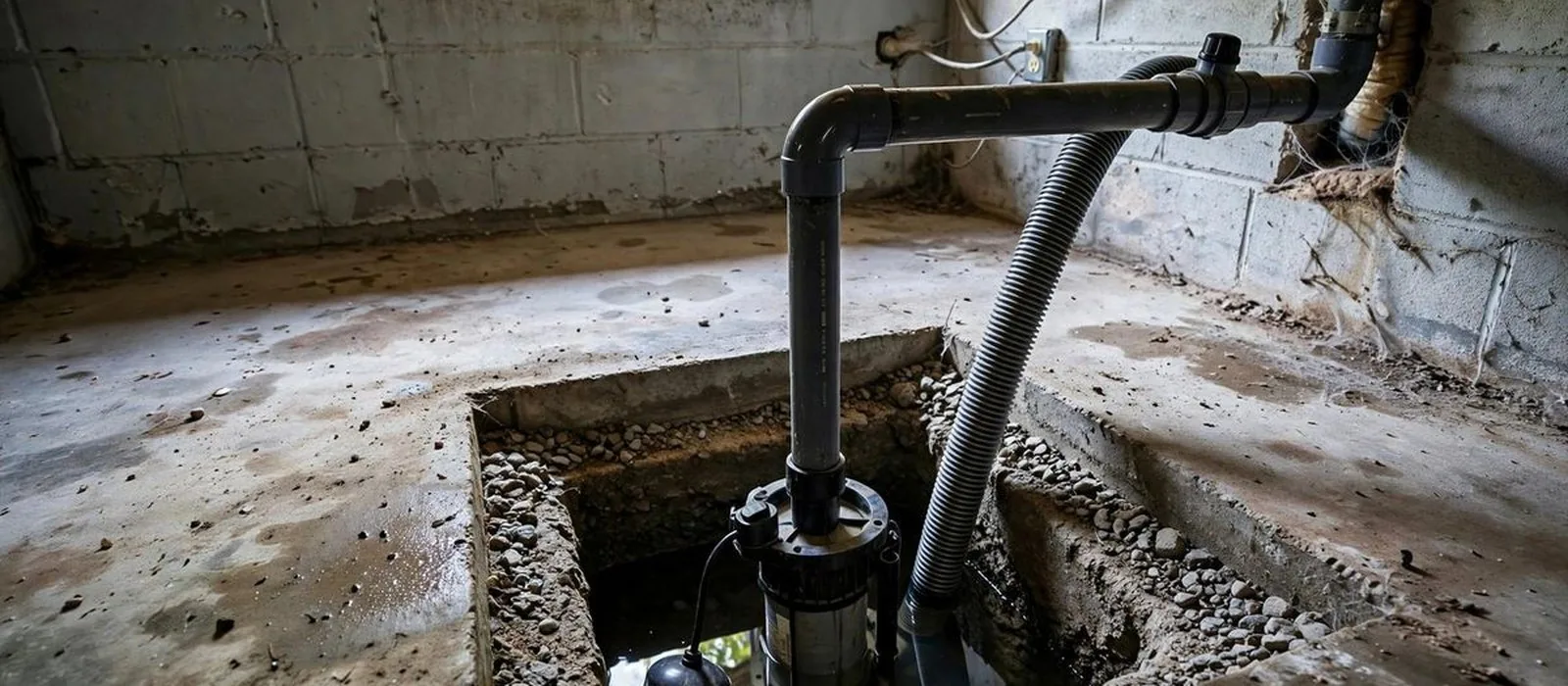
Pump silent and the pit is rising
.Sump pump repair Chanhassen basements need during a thaw or a cloudburst starts with one picture: the pit is filling, the pump is not running, and the water has nowhere to go but up. The line is open 24/7. While you wait, protect your own safety first and the floor second.
Water and electricity do not mix. If the floor is wet, or the cord, outlet or pump are standing in water, do not touch them. Stay out of the basement and, if the panel is in a dry spot, shut off the breaker that feeds the area.
Unplug the pump only when your feet and the plug are dry.
If the way is dry, move stored items up off the floor and lift the pit lid to see how high the water is.
Before calling, check two quick things. Look at the GFCI outlet the pump plugs into and reset it if it has tripped. Make sure the plug is fully seated. A pump that comes back on after a reset still needs a look, because tripping means something drew too much current.
Why Chanhassen basements ask a lot of their pumps
.Many homes here sit close to Lake Minnewashta, Lake Ann and the other lakes spread through the city. Ground close to a lake often holds more water, which means the pit fills more often and the pump runs more cycles. A pump working hard all spring wears out sooner, so an older unit near a lake is worth testing before the thaw rather than after.
Much of the housing here went up after the city formed in 1967. A pump that came with a house of that age may be well past the age when manufacturers expect replacement. Check the label for a date, and if there is none, plan for a replacement rather than waiting for a failure at the worst moment.
Float switches, motors and the other usual faults
.Most pumps have a float that rises with the water and switches the motor on. If the float sticks against the pit wall, jams under a pipe or is caught on its own cord, the pump will not start even though it is healthy. Moving the float by hand, with the power safe, is a quick test. A stuck float can also run the pump nonstop, because it never drops to shut the motor off.
A pump that hums without pumping often has a jammed impeller, which is the spinning part that moves the water. Gravel, silt or small stones get pulled in and lock it up. A pump that is silent with a good outlet and a free float usually has a burned motor. Bad capacitors, worn bearings and old age all end that way, and in most cases the answer is replacement.
| What you observe | Likely cause | Typical fix |
|---|---|---|
| Pump never starts, pit full. | Tripped GFCI, stuck float or dead motor. | Reset, free the float or replace the pump. |
| Pump hums but moves no water. | Jammed impeller or airlock. | Clean the intake, drill a relief hole, or replace. |
| Runs constantly. | Stuck float, failed check valve or high water table. | Free the float, replace the valve, size the pump. |
| Loud bang after each cycle. | Check valve slamming shut. | Install a quiet check valve. |
| Water flows back into the pit. | Failed or missing check valve. | Replace the check valve. |
| Pump runs, discharge is dry. | Frozen or blocked discharge line. | Thaw and reroute or insulate the line. |
| Cycles every few minutes in dry weather. | Possible plumbing leak or groundwater. | Test for leaks. |
Check valves, noise and backflow
.The check valve sits on the discharge pipe just above the pump. It lets water leave and keeps it from falling back. A sharp knock after each cycle is that valve snapping shut, and a quiet-spring model fixes it. When the valve fails, the water in the pipe drains back into the pit, the pump starts again, and the cycle repeats. That short cycling wears out the motor far faster than normal use does.
Check valves and discharge piping fall under the plumbing code. Pump discharge is a topic in the Uniform Plumbing Code (UPC) that Minnesota carries forward, which generally expects a check valve to stop pumped water from flowing back and a discharge that goes somewhere approved. Whether those rules reach your repair is a question for the plumber.
Call the 24/7 line before the pit overflows. The plumber can sort a simple reset from a stuck float or a pump that has to be replaced.
A pump that runs and runs
.Constant running has three common causes. A stuck float is the easiest. A failed check valve lets water cycle back. The third is real inflow: a high water table after heavy snowmelt, or a drain tile that is channeling more water than the pump can handle.
In that case a stronger pump, a second pump or a different discharge route may be needed. A pump that runs in dry weather for weeks deserves a closer look, since a leaking pipe can feed the pit, and a leak detection visit can rule that out.
Frozen discharge lines in winter
.Minnesota cold can freeze the pipe that carries water out of the house. If the pump motor runs but the outlet outdoors stays dry, ice is likely blocking the line. Water then has nowhere to go, the pump overheats, and the pit overflows. Keep the exterior end clear of snow, pitch the pipe so it drains, and consider a bell-style or open-end outlet that lets water escape when the main end ices up.
Any new outside discharge line means digging, and Gopher State One Call (811) should be called before the shovel goes in. Swapping a pump in an existing pit involves no digging, so 811 does not come into it. Before a new discharge route goes in, check with the city's building inspections division on whether it wants paperwork.
Battery and water-powered backups
.Storms knock out power, and that is when the pit fills fastest. A battery backup is a second pump with its own deep-cycle battery and controller.
It runs for hours rather than days, depending on inflow and battery size, and needs periodic battery replacement. Water-powered backups use water pressure from a supply line to move water out, need no electricity, but they use extra water and depend on your pressure. Ask your plumber which fits your water source and the house.
Sump pump or sewage ejector?
.They look alike but do different jobs. A sump pump moves groundwater from a pit around the foundation. A sewage ejector pump sits in a sealed basin and lifts waste from a basement bathroom, laundry or kitchen up to the main drain. Ejector pits have a gasketed lid and a vent, and the pump handles solids.
Never use a sump pump in an ejector basin, or the reverse. If a basement bathroom smells or the toilet is slow to clear, ask whether the ejector is the cause, and see sewer line cleaning if the line past the pump is the suspect.
Test it before it matters
.Once or twice a year, and always before spring melt, pour a five-gallon bucket of water into the pit. The float should lift, the pump should start, the water should drop quickly and the check valve should close without a bang. Listen for grinding. Look for rust-streaked housing. Clear any debris and check that the discharge outlet flows freely outdoors.
What goes into a sump pump bill
.Reset, repair and replacement vary widely, so a plumber looks at the pit before naming a price.
Many homeowner policies exclude groundwater or require a specific endorsement for sump failures. Read your policy and photograph the pit, the pump label and any water line on the walls before anything gets moved.
For a price on your pump, call the 24/7 line and describe the sounds, the pit and the age of the unit.
Easing the pit before help arrives
.A calm, short checklist works better than a rush to the basement.
Where the plumber stops
.Plumbers repair and replace pumps, check valves, discharge piping and backup systems. Exterior grading, gutters, window wells and foundation crack sealing belong to other trades.
If water keeps coming in through walls or the slab even with a working pump, basement waterproofing is the scope that addresses the cause, and a pump is only part of the answer. To verify any contractor, use the DLI Check a License lookup. Pump hookups and discharge piping follow the state plumbing code.
Sump pump questions from Chanhassen basements
.Yes. Storms do not keep business hours, and the line is open 24/7. Slower pump faults can often be booked for the same day.
Keep out of any water that reaches cords or outlets while you wait.
Only if the floor and the plug are dry. If there is standing water near the outlet, stay out and call. The breaker can be shut off from the panel when the panel itself is dry.
Twice a year is a good habit, and once more right before spring melt. Pour a bucket of water into the pit and watch the float, the motor and the check valve.
The check valve is snapping shut as the water in the pipe falls back. A quiet check valve usually cures it. If the valve has failed entirely, the pump will short-cycle.
No. Toilets, sinks and showers below grade drain to a sewage ejector basin, which is sealed and rated for solids. A sump pump in that role will clog and fail.
The pump runs, but nothing comes out of the pipe outside, and the pit rises anyway. Thawing and rerouting the line are the usual fixes.
Ground near a lake can hold more water, and storms often take out power. A backup pump is worth discussing for any home where a flooded basement would be costly.
Do not wait for the forecast to clear. Call the line, describe what the pump is doing, and a licensed plumber will plan the visit with you.