
Main line backup: when every drain complains
.Sewer line cleaning Chanhassen homes need usually starts with a pattern. The toilet gurgles when the washer drains, the tub slows, and a floor drain in the basement burps. These signs point at the main line, the large pipe that collects every branch before leaving the house.
Sewer line cleaning means clearing a blockage from that pipe so waste moves again. The 24/7 line is open all night. Until the plumber arrives, stop using water, keep the lowest drain covered, and stay out of the damp basement if it smells.
Main line or single fixture: telling them apart
.A single clogged fixture has a local cause, and a plunger or small auger may do. A main line clog affects the lowest fixtures first because water backs up from the bottom.
| Pattern | Likely clog | Why |
|---|---|---|
| Only the kitchen sink is slow. | Kitchen branch. | No other fixtures share that pipe until it joins the main. |
| Upstairs toilet flushes and the tub downstairs gurgles. | Main line or a shared stack. | Air and water are being pushed back through the lowest opening. |
| Basement floor drain rises when laundry runs. | Main line. | The floor drain sits at the lowest point of the system. |
| Everything drains slowly, even in dry weather. | Main line, partly blocked. | The pipe is narrowed but not yet closed. |
| Sewage smell in the yard near the foundation. | Lateral outside the house. | Wastewater may be surfacing from a full line. |
| Same pattern returns after cleaning. | Damaged or rooted pipe. | A camera check is the next step. |
Finding the cleanout
.A cleanout is a capped pipe that gives a plumber direct access to the main line. In a Minnesota home it is often in the basement near the foundation wall or the floor, in a crawl space, or outside by the house. Newer homes tend to have one, while older ones may need a toilet pulled to get in.
Cleanout access is a code matter as well as a convenience. Minnesota's plumbing rules trace to the Uniform Plumbing Code (UPC). That is why drain lines generally have to be reachable for rodding and a capped fitting sits in many basements. If yours is buried or missing, ask the plumber what is usual and ask the city inspections staff what your house needs.
If you can find the cleanout cap, you can tell dispatch where it is. Do not open it yourself if the line is backed up, because standing sewage can spill. Planning any digging outside? A call to 811 brings locators to flag the buried lines first.
The 24/7 line connects you with a licensed plumber who will ask about the pattern, explain the plan, and quote a clear price before work starts.
Cutting roots and clearing the line
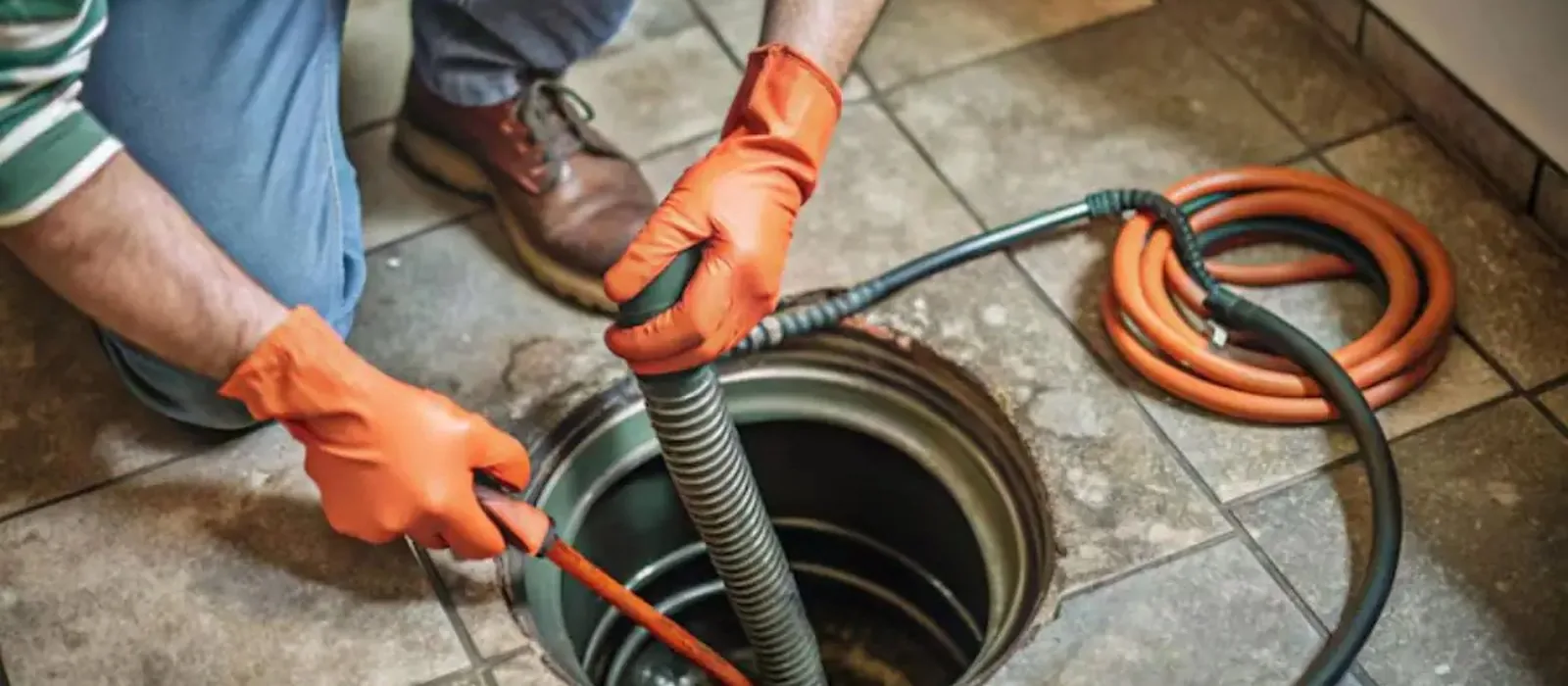
.Roots are the most frequent natural cause of a main line clog. They grow into joints and form a net that catches paper and grease. A heavy cable with a root-cutting head or chain knockers chops through the mass and restores flow, usually within a visit.
Jetting is the other main method. It washes the line instead of cutting it, which suits grease, sludge and fine root hair. You can see how the two compare on the hydro jetting page. Many plumbers use a cable first and jet afterward.
Neither method repairs the pipe. Roots grow back if the joint stays open.
What cleaning cannot fix
.Cleaning clears what is in the pipe. It does not fix what is wrong with the pipe. A cracked section, an offset joint, a belly that holds water, or a collapsed bend will keep catching waste no matter how clean it was left yesterday.
That is why a camera pass after clearing is useful. If it shows damage, the next move is a repair, not another cleaning. A recording of the pipe also helps if you need to talk to an insurer or a buyer later. A planned look is described on the sewer inspection page.
Keeping the line clear afterward
.- Flush only toilet paper and human waste. Wipes sold as flushable still tend to catch in pipes.
- Keep grease, coffee grounds and fibrous scraps out of the kitchen drain. See drain cleaning for kitchen line habits.
- Watch large trees and shrubs near the lateral. Roots seek moisture at joints.
- Do not pour concrete, paint or construction slurry down a drain.
- Base a cleaning schedule on what the camera shows, not on a calendar.
Some lines need yearly attention and others stay clear for a decade. The camera video, not a rule of thumb, is how you tell.
Tell everyone in the house what the line cannot take. Guests, teenagers and tenants are the usual source of the one flushed item that starts the next blockage.
Floor drains and the sump pit in a Minnesota basement
.Many Minnesota basements have both a floor drain and a sump pit. They do different jobs. The floor drain connects to the sewer and handles laundry or equipment discharge. The sump pit collects groundwater and pumps it outside.
When a floor drain backs up, the cause is the sanitary sewer. A sump pit that fills is a groundwater and pump issue. Mixing them up leads to the wrong fix, so tell dispatch which you are looking at. For pump trouble, see sump pump repair.
Before the cleaning crew arrives
.A little prep keeps the visit short.
What changes the price of main line cleaning
.The cost depends on what is in the pipe and how easy it is to reach. The price is stated up front, once the plumber knows how far the clog sits from the cleanout.
Clearing a clog is normally treated as upkeep rather than a loss. Damage from a backup may be covered when your policy includes sewer backup protection, so read the endorsements or call your agent.
Quote accuracy depends on details, so tell the dispatcher which drains are slow and whether you have found the cleanout.
Hiring and verifying the plumber
.Main line work in Minnesota is reserved for licensed or registered plumbers and the crews of licensed contractors. The state labor department publishes a searchable license database, and a minute there confirms the name on the van. Rules for the work itself sit in chapter 4714 of Minnesota Rules.
Basic clearing seldom calls for a permit, though swapping out pipe can, and city building staff will say which side of that line your job falls on.
Sewer line cleaning questions
.Yes. The line is staffed 24/7. A backing-up main line is treated as urgent.
Tell dispatch which drains are affected so the right equipment is sent.
There is no fixed interval. Lines with roots may need regular visits, while smooth lines can go years.
A camera video after the first cleaning gives the best answer.
Not reliably. They hold together longer than paper and snag on roots and rough joints.
The safest wipe is one that goes in the trash.
Tell dispatch. Many cleanouts are in the basement, crawl space or outside near the foundation. A plumber can look for it, or pull a toilet to gain access.
If the smell came from a full line, clearing it helps. If it persists, the pipe may be damaged and needs a camera check.
Usually, yes. A floor drain that bubbles when laundry runs often points at the main line, not the sump pit.
The city handles the public main. The homeowner generally owns the lateral, though it varies. Ask the city to confirm where your responsibility begins.
Call in and request a licensed plumber who can clear the main, add a camera pass if it helps, and fit you in the same day when the calendar allows.