
Sewer backup or repeat clogs: where jetting starts
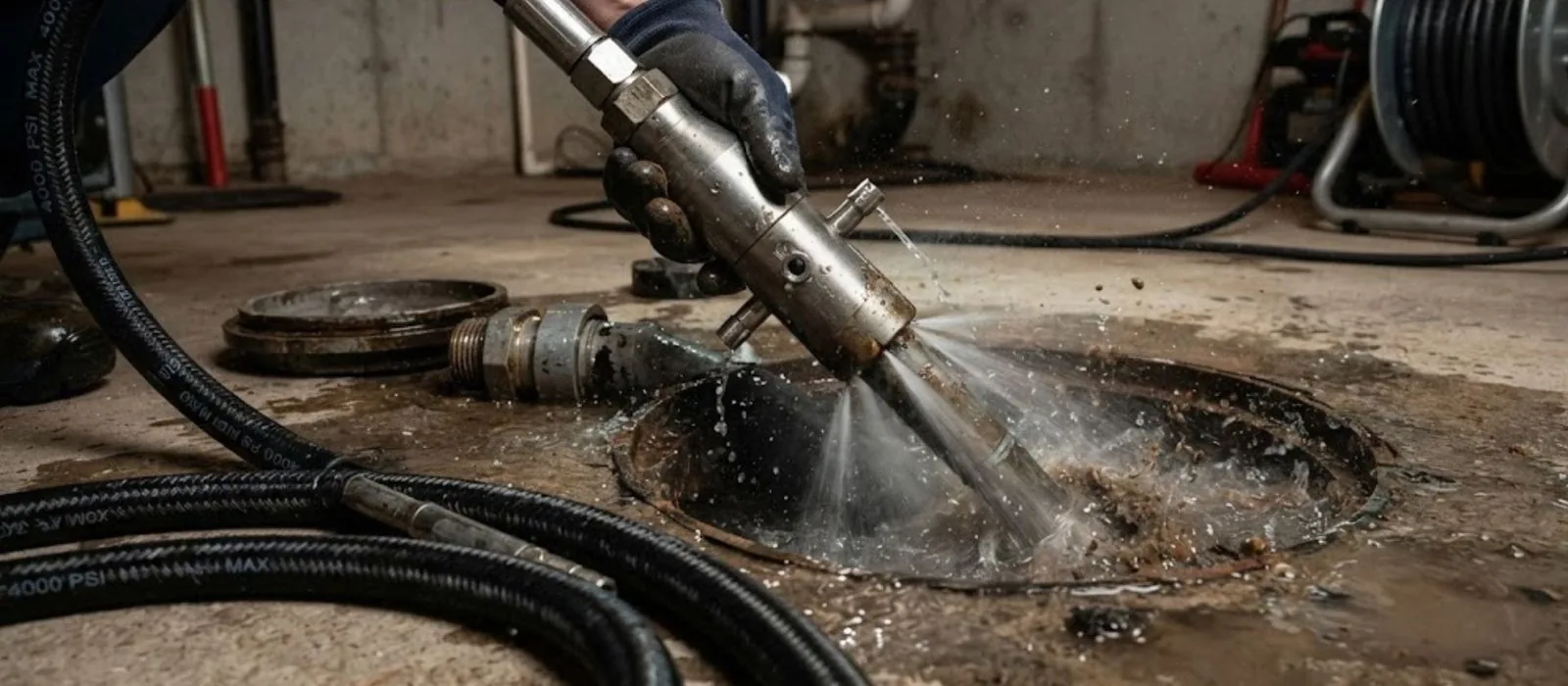
.Hydro jetting Chanhassen plumbers perform sends water at very high pressure through a hose with a nozzle, scouring grease, scale, sludge and root fibers off the inside of a pipe. It is a cleaning method, not a repair. When a drain keeps clogging or sewage is coming up through a floor drain, it clears the line wall to wall instead of just poking a hole.
Our line is open 24/7. While you wait, stop all water use, keep kids and pets out of any wet basement area, and keep clear of pooled water around outlets or appliances. Do not pour chemicals into the drain, since the crew may handle that water.
How jetting differs from a cable
.A cable cuts or pushes. It works well on a single plug of hair or a root mass, and it is quick. But it leaves a ring of residue clinging to the pipe and the opening it makes is only as wide as the cutting head.
Jetting works like a pressure washer for the inside of the line. The nozzle sends jets backward to pull the hose forward and forward to break the debris. The result is a pipe that returns closer to its full inside diameter, which is why jetting is the usual answer to grease and mineral scale.
| Situation | Best first move | Why |
|---|---|---|
| One-time hair or paper clog. | Cable. | Fast and cheap. A jet is more than the job needs. |
| Grease build-up, kitchen or restaurant line. | Jetting. | Water and heat strip the film that a cable only pokes through. |
| Same clog back within weeks. | Camera, then jetting. | A look shows whether the pipe is rough, offset or full of roots. |
| Tree roots in a clay or concrete lateral. | Cable with a cutter, jetting after. | Cut the mass first, then wash the fibers out. |
| Old clay, Orangeburg or suspected collapse. | Camera first. | High pressure can finish off a weak pipe. |
| Bellied (sagging) section holding water. | Camera, then a repair plan. | Jetting clears the bath but the sag will fill again. |
When jetting beats the cable
.- Grease that coats the line and returns every few weeks.
- Mineral scale and soap curd that narrow the pipe slowly.
- Roots that grow back in a lateral after each cable cut. Jetting does not kill roots, but it removes the fine hairs that catch debris.
- Repeated clogs in a line a camera has shown to be sound.
- Sludge in a long horizontal run where a cable only bores a hole.
When jetting is the wrong tool
.High pressure is strong, and weak pipe cannot always take it. A collapsed section, a cracked joint or a pipe with a big sag may break open or wash out soil around it. Very old clay tile and Orangeburg, a tar-paper-like pipe sold in mid-century housing, can be too fragile for any aggressive cleaning.
In those cases, the sensible first move is a look inside. A sewer camera inspection shows the material, the joints and the damage before any pressure goes in. If the camera finds a break, the answer is repair, not jetting, and the sewer line repair page explains the choices.
Call the 24/7 line, say how often the clog returns, and a licensed plumber will advise whether a jet or a camera look should go first.
What a jetting visit looks like
.Find the access
The crew locates a cleanout, usually in the basement, crawl space or yard. A missing cleanout may mean pulling a toilet.
Protect the space
Drop cloths, containment and a plan for where water will flow keep the mess out of finished areas.
Run the nozzle
The hose goes in, the nozzle works up and down the pipe, and debris flushes toward the main.
Check the flow
Water is run to confirm the line moves. A camera pass after jetting shows what the pipe looks like now.
Review what was found
The plumber explains whether the line is sound, and whether to schedule cleanings or a repair.
Hard water and scale in Chanhassen pipes
.The city treats its well water for iron and manganese but does not soften it. The water arrives at about 21 grains per gallon, which leaves mineral scale in drain lines over the years. If your house has no softener, scale is a plausible reason a cable clears the clog and it returns.
Jetting removes loose scale and softer deposits, though it will not strip hard mineral layers. Ask the plumber what the camera shows. A home softener could slow future buildup, a point the city itself raises for most households.
Restaurants, shops and shared grease lines
.Food service and commercial kitchens in the Market Street Station and downtown West 78th Street area deal with fat that cools and clogs in the lateral. Jetting is the standard answer to grease because hot or pressurized water lifts the film cable tools miss. For a business, commercial plumbing service can work around opening hours.
Grease interceptors and trap maintenance fall under different rules. Ask the city or your landlord which apply to your building.
Camera check after the water stops
.A line that was jetted is clean, which is the best moment to look at it. Debris no longer hides cracks, offsets or root entry points. Ask for the recording and for a short written note of what was seen.
That video also tells you how often to schedule cleaning. A line with a smooth interior may stay clear for years, while a rough or rooted line may need regular visits. For more on blockage work, see sewer line cleaning and drain cleaning.
Before the jetting crew arrives
.Jetting is cleaner than it sounds if the space is ready.
What affects hydro jetting cost
.Jetting is more equipment and more time than a basic cable run, so it prices differently. Expect a firm number before the hose goes into the line.
A line that clogs from everyday use is usually a maintenance cost, not a claim. Water damage from a sudden backup is a different matter and some policies do cover it, so ask your agent.
For a figure that fits your pipe, tell the dispatcher how long the line is, how often it clogs and whether a cleanout exists.
Risks worth knowing before you say yes
.Jetting is safe on healthy pipe, but nothing is risk-free. Water can spray back through an open fixture if the crew does not control it. Weak joints can fail. Blockage can move downstream and re-form at a bend.
A licensed plumber knows which signs call for caution. The state's online license search, run by the Department of Labor and Industry, confirms who you are letting near your pipes. Pure cleaning seldom triggers an inspection, but if the camera leads to pipe replacement, check with the city's inspections office first.
Hydro jetting questions
.Yes. Dispatch answers 24/7. For a sewer backup, say so right away, because the plumber may need to clear the line before jetting.
If the pipe looks fragile, a camera check may come first.
On sound pipe, rarely. On cracked, collapsed or very old pipe, pressure can make things worse.
That is why a camera is the careful first step on older lines.
A rod or cable pokes a hole through a clog. A jet washes the pipe wall.
Both have a place. Jetting handles grease and scale better, and cable is quicker for a simple plug.
It depends on what caused the clog. Grease and scale may return in time if habits and water chemistry do not change.
A camera video after jetting gives a better guide than any calendar.
Not reliably. It removes root hairs and flushes debris, but roots can regrow from the plant. A cutter on a heavy cable removes the mass first.
A damaged joint that lets roots in needs a repair.
Location matters less than pipe material and age. A plumber checks the material and condition, not the lake nearby.
If your home uses a septic system, jetting the house-side line is possible, but tank service is a different trade.
Cleaning does not normally need one. Replacing pipe after the camera look is where the city's inspections office comes in.
Dial the line and request a licensed plumber who will name a price first and book the same day when the schedule has room.