
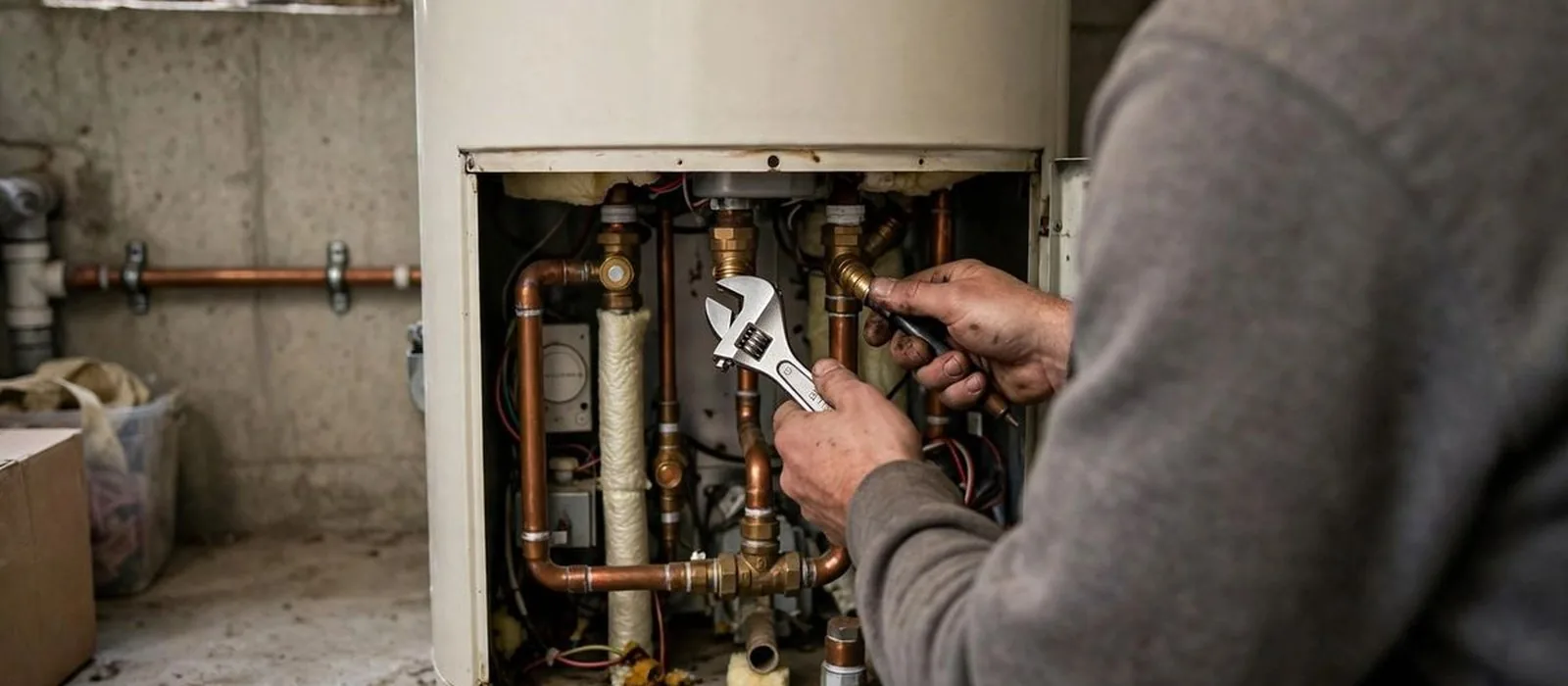
No hot water or water on the floor: start here
.Water heater repair in Chanhassen usually begins with one of two problems. The shower has gone cold, or there is water spreading across the basement floor. Either one is worth a call right away, and our line is open 24/7 so you do not have to wait for morning.
A water heater is a steel tank, a source of heat and a set of safety devices. Repair means fixing the heat source, the controls, the valves or the plumbing connections around the tank. It does not mean restoring a tank that has rusted through.
While you wait for the plumber, take three steps. Close the cold water valve on the pipe feeding the heater. Switch off the breaker for an electric unit, or turn the gas control knob to off or pilot on a gas unit. Then keep towels or a wet vacuum on the leak and move anything valuable off the floor. A gas smell changes the plan: step outside with everyone and ring the gas utility or 911 first.
Reading the puddle: where the water is coming from
.Not every wet floor means a dead tank. Before anyone decides on parts, the plumber works out where the water starts, because the answer changes the whole repair.
| Source of water | What it usually means | Typical outcome |
|---|---|---|
| Fitting or connector on top. | Loose union, worn flex line or failed thread seal. | Repair on site. |
| Drain valve at the bottom. | Worn washer or a valve that was not closed fully. | Repair on site. |
| Relief valve or its pipe. | High pressure, high temperature or a worn valve seat. | Find the cause, then repair. |
| Light moisture on the jacket. | Condensation on a cold tank or a gas unit with a cool burn. | Monitor and correct. |
| Tank body or base. | Rusted-through liner from corrosion and scale. | Replacement. |
Condensation is the one that fools people. A gas unit firing into a cold tank, or a tank filled with very cold incoming water, can sweat for a few minutes. If the moisture stops and the floor stays dry, you may be looking at that and nothing more.
Gas heaters that will not stay lit
.A gas water heater needs three things to hold a flame: gas supply, a pilot or ignitor, and a sensor that proves the flame is there. Most no-hot-water calls on gas units come down to one of those three.
- A pilot that goes out as soon as you release the button often points to a worn thermocouple or a dirty pilot assembly.
- A burner that fires and then shuts down early can mean a sensor tripping, a draft problem or a failing gas control valve.
- Soot, a yellow flame or a scorched look around the draft hood are signs to stop and call. Combustion trouble is not a do-it-yourself job.
Plumbers handle the water side and the gas piping at the heater, including the shutoff and the connector. If the fault traces back to the chimney, the vent pitch or combustion air in the room, you may need a venting specialist alongside the plumber. A good technician tells you where that line falls before any work starts.
Tell dispatch whether the trouble is a puddle or a cold tap, and what the controls show. A licensed plumber will talk you through the shutoffs and get on the road.
Electric heaters: elements, thermostats and breakers
.Most electric tanks carry two heating elements, one high and one low, each with its own thermostat. The upper element warms the top of the tank first. The lower one does most of the work after a long shower.
When the water turns lukewarm fast, the lower element is the usual suspect. When there is no heat at all, look first at the breaker, then at the high-temperature reset button behind the upper access panel. A reset button that trips again and again points to a bad thermostat or a shorted element, not a nuisance trip.
Do not open the panels yourself with the breaker on. Elements and thermostats are tested with a meter, and a technician can change them in a single visit when the tank itself is still sound.
Hard water, sediment and the sounds your tank makes
.Chanhassen's wells reach deep aquifers, and the treatment plants strip out nearly all the iron and manganese. Softening is not part of that process, and the hardness the city publishes is roughly 21 grains per gallon. Water that hard drops calcium and magnesium whenever it is heated, and they settle at the bottom of your tank as scale.
Over the years that crust insulates the water from the flame or element, which is why popping, rumbling and slow recovery show up in homes without a softener. Neighbors on the other side of the Eden Prairie line get water the city softens before it reaches them, so their tanks face a lighter load. Yours may not.
- Popping or rumbling during a heat cycle usually signals sediment under the burner or element.
- Brown or rusty hot water, but clear cold water, points at the tank or its anode rod.
- A rotten-egg smell in hot water only is often a reaction between the anode rod and bacteria in the tank.
- Short supply of hot water on a tank that used to last means the tank is losing usable volume to scale.
A flush clears loose sediment through the drain valve. Heavily crusted tanks may not flush clean, and a drain valve that has sat for ten years can clog or break when opened. A plumber can tell you whether a flush is safe or whether it will start a leak.
Never plug the pressure relief valve
.The relief valve opens when pressure or temperature in the tank climbs too high. A discharge pipe carries the water down toward the floor. Plugging, capping or screwing a tight cap on that line removes the one thing standing between an overheated tank and a rupture.
Relief valve rules come straight from the plumbing code. The Minnesota rules grow out of the Uniform Plumbing Code (UPC), which expects a relief valve on a storage heater, with the discharge pipe ending somewhere a hot spray harms no one. The plumber can check yours during a repair, and if the piping has to change, Chanhassen inspections staff can say what applies.
If the valve drips, the likely causes are household water pressure that is too high, a thermal expansion problem in a closed system, a thermostat set too hot, or a valve whose seat has worn. Each calls for a different fix. Some homes need an expansion tank, and some need a pressure reducing valve checked. A plumber can read a gauge on a hose bib and see which applies.
Repair or replace: a quick decision table
.| What you see | Heater age and condition | Usual recommendation |
|---|---|---|
| Lukewarm water, electric unit. | Tank dry and sound. | Test and replace element or thermostat. |
| Pilot will not stay lit. | Tank dry and sound. | Replace thermocouple or gas control. |
| Dripping relief valve. | Any age. | Find the pressure or heat cause first. |
| Water at the tank base. | Any age. | Plan replacement. |
| Rusty hot water and repeat repairs. | Well past its expected life. | Plan replacement. |
| Noise only, tank dry. | Younger tank. | Flush, then monitor. |
If the unit is more than a few years into its working life and keeps costing you service calls, replacing the heater often makes more sense than another part. A homeowner who is already thinking about a different technology can read about tankless options before deciding.
When a water heater failure is an emergency
.Call at once when the tank is flowing and nothing slows it, when the relief valve sprays hot water without letting up, when gas is in the air, or when a tank in an upstairs closet is soaking the ceiling below. A basement tank that is simply cold can wait for a calm daytime visit. A tank that is flooding cannot.
Before We Arrive
.These steps limit damage while a plumber is on the way. Skip anything that feels unsafe.
How a repair visit actually goes
.Triage
The plumber confirms the leak source, checks gas or power safety and shuts off what needs shutting.
Diagnose
Meters, gauges and a look at the data plate separate a part failure from a tank failure.
Explain
You hear the fault, the options and the price before any parts are installed.
Repair
The part is replaced, the connections are tested and the relief valve and discharge line are checked.
Verify
The unit is brought to temperature and watched through a heating cycle.
Before a stranger touches your heater, look the name up in the DLI license lookup to confirm the license is real. Heater piping, valves and discharge lines fall under Minnesota's plumbing rules in chapter 4714. A like-for-like part swap seldom needs a permit, but ask the city's building inspectors if the job grows.
If a leaking pipe elsewhere is behind the dampness, leak detection can find the real source instead of guessing. Heater trouble is also common in homes across Eden Prairie, where the city softens its supply, so hard water is only part of the picture.
What shapes the price of a heater repair
.A repair quote depends on what failed and how hard it is to reach. Expect the cost to be explained before parts go in, so the decision stays yours.
Policies often respond to a flood from a sudden tank failure while excluding the heater and slow seepage. Photograph the damage, keep any failed parts and check with your insurer on which records it wants.
Describe the symptom to the dispatcher for a realistic figure. A licensed plumber will walk through the likely cost drivers with you.
Questions about heater repair in Chanhassen
.It depends on where the water comes from. A drip at a fitting, a supply connector, the drain valve or the relief valve is usually fixable. Water seeping from the tank body, or from the bottom of the jacket, almost always means the steel liner has rusted through.
A tank that has failed that way cannot be patched. The honest answer is replacement, and the sooner the supply is shut off, the less water ends up in your floor.
On an electric unit, a burned-out lower element or a tripped thermostat limit is a common reason for lukewarm water. On a gas unit, a weak pilot flame or a worn thermocouple can do it. Sediment on the bottom of the tank also steals capacity, so the hot supply runs out early.
A technician can test the elements, thermostat and gas controls in one visit and tell you which part is at fault.
Yes. The dispatch line runs 24/7, including holidays, and licensed plumbers are sent from Chanhassen. A flooding tank at 2 a.m. gets the same attention as a Tuesday afternoon call.
While you wait, close the cold water valve above the heater and turn off the power or set the gas control to off.
Not for long. The temperature and pressure relief valve is the last safety device on the tank. A valve that drips constantly may be reacting to high pressure in the house, to a heater running too hot, or to a worn seat.
Never cap or plug the valve or its discharge pipe. Have a plumber find out why it is opening.
Usually it is annoying rather than dangerous. The noise comes from water trapped under a crust of mineral sediment that boils and bursts through it. The crust also forces a gas burner or element to work harder. If the tank is old and the noise is new, have it looked at, because heavy sediment and a failing tank often show up together.
Yes. Hardness near 21 grains per gallon, the number the city publishes, is high enough to crust heating surfaces and the tank floor with scale. Flushing the tank on a schedule and pairing the heater with a softener can slow that damage.
Look at the data plate for the manufacture date. A younger tank with a bad thermostat, element or valve is a good repair candidate. An older tank with a wet base, rusty hot water or a history of repeat failures is usually better replaced. The decision table on this page lays out the common cases.
A same-day slot may be open depending on the schedule, and dispatch answers at any hour if the tank cannot wait. Describe what the tank is doing when you call.