
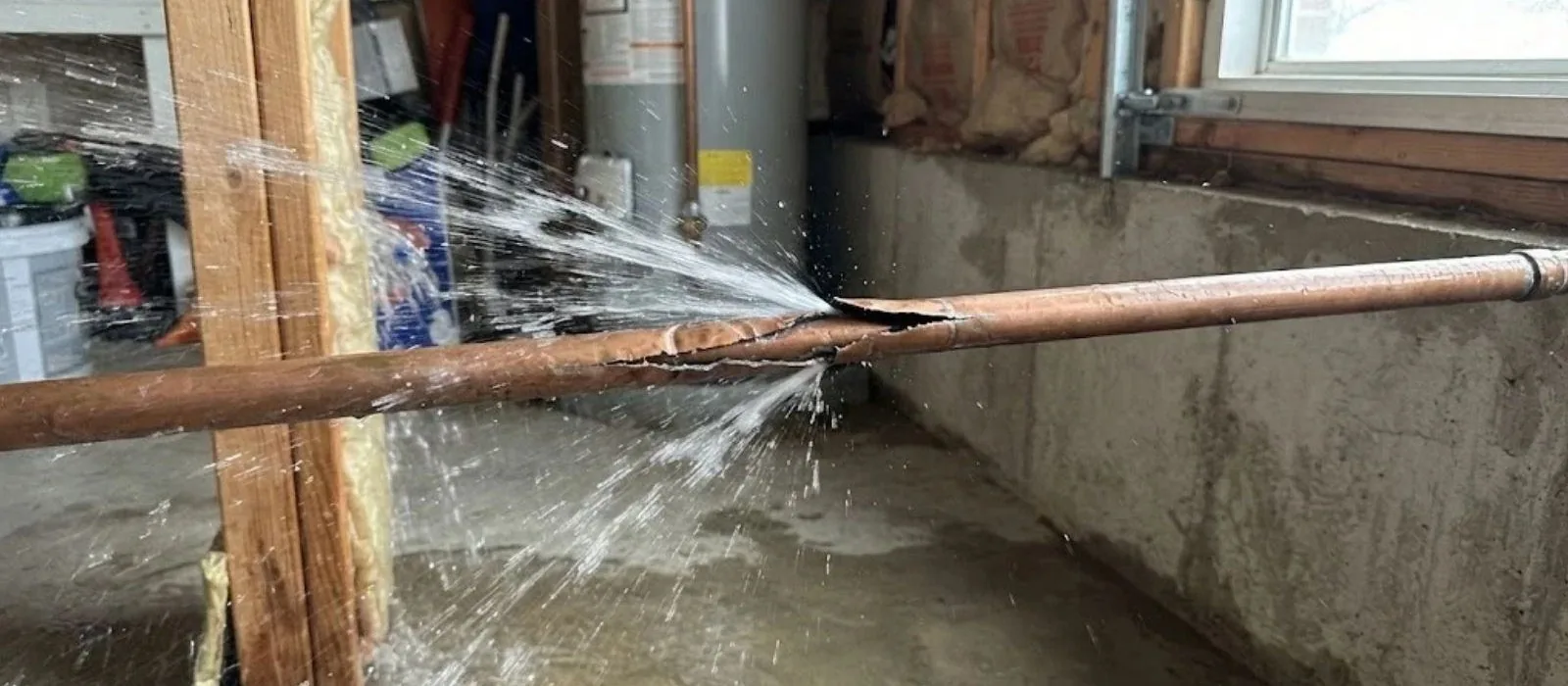
Burst pipe repair in Chanhassen: what to do in the first minutes
.Burst pipe repair in Chanhassen begins before the plumber arrives, with whatever you can do to stop the flow. Dispatch answers at any hour, so phone the moment the main valve is closed. Every minute the pipe runs, more water gets into floors, ceilings and insulation.
- Find the main shutoff valve, usually near where the water line enters the house or near the meter, and turn it fully closed.
- Open a faucet on the lowest level to drain what's left in the lines, and flush a toilet or two upstairs.
- If water has reached outlets, light fixtures or the panel, cut the breaker for that area, but only if the panel is reachable without wading. When it isn't, stay out and call.
- Move rugs, furniture and valuables out of the wet zone and set out buckets or towels.
- Photograph the damage and the split pipe before cleanup, with a few wide shots of the room and a close one of the break.
Don't turn the water heater back on until the plumbing is repaired and refilled. An electric element run dry can burn out, and a gas unit can overheat with air in the tank. Smell gas near the heater? Everyone goes outside first, and the gas utility or 911 gets the call before any plumber does.
Why Minnesota winters split pipes
.Water expands when it freezes, and the ice plug does the damage, not the cold itself. As the ice grows in a closed section of pipe, pressure builds between the plug and the nearest closed faucet, and the pipe wall gives way. The split often sits a few inches away from the ice. It stays hidden until the plug melts and water starts to flow.
Chanhassen sits in a hard-winter climate, and the usual weak spots are well known. Pipes in exterior walls, runs along north-facing walls, unheated garages, crawl spaces, rim joist areas and attic supply lines all lose heat first. So do hose bibs that were left connected to a hose in the fall. With most homes here built after 1967, many have PEX or copper, which fare differently in a freeze (see the table below).
A pipe can freeze solid and not break. The danger is the thaw. If you find a frozen line, shut the main valve first, then open the nearest faucet before you thaw, so water has somewhere to go once the ice melts.
Thawing a frozen pipe safely
.- Never use a torch, a propane heater or any open flame. It can ignite framing and overheat soldered joints.
- A hair dryer on low, moving along the pipe from the faucet end toward the frozen section, is the safest do-it-yourself method.
- Heating pads and warm towels work on exposed pipe. Space heaters should stay clear of insulation and stored items.
- Keep the faucet open as the ice melts. Water should start as a trickle and increase.
- Check for splits and drips as flow returns. A pipe that leaks after thawing needs a plumber.
If the frozen section is inside a wall, under a slab or you can't reach it, call. A plumber can thaw with controlled heat, check for damage and repair any split before flow resumes. Don't try to force the valve or open the wall yourself unless you're prepared to patch it.
A burst, a failed joint or a pinhole: telling them apart
.Not every wet pipe is a full burst, and the difference changes the fix. A burst is a split along the pipe wall, usually from freezing or a pressure spike, and water arrives quickly. A failed joint leaks at a fitting, solder joint or compression nut, often slowly at first. A pinhole is a tiny corrosion breach in older copper or steel that sprays a thin jet or weeps.
Pinholes matter because they rarely come alone. If one has opened in a copper line, the pipe wall elsewhere has often thinned from the same cause, such as aggressive water or flow wear. A repair that fixes one pinhole may be followed by another within months. That pattern is one of the honest reasons to discuss repiping instead of a series of patches.
Repair methods by pipe material
.How a split is repaired depends on what the pipe is made of and how much of it has failed. Here is how the common materials compare.
Choosing a pipe and fittings is covered by the plumbing code, which in Minnesota is based on the Uniform Plumbing Code (UPC). The code generally expects pipe and fittings that suit each other and the water they carry, so a quick patch may only be a temporary fix. The plumber tells you what makes a lasting repair, and the building inspections people at Chanhassen city hall answer inspection questions.
| Pipe type | Usual repair | When replacing a longer section is smarter |
|---|---|---|
| Copper. | Cut out the split section and sweat in a new piece with fittings. | Multiple pinholes, green corrosion along the run, or several repairs in the same line. |
| PEX. | Cut out the damaged length and join with crimp or expansion fittings. | Damage along a long run, UV exposure, or a manifold that has been stressed. |
| Galvanized steel. | Replace the section with threaded fittings or transition to modern pipe. | Internal rust buildup, low pressure, or fragile threads that break when touched. |
| CPVC. | Cut and cement a new section with a coupling. | Brittle, discolored pipe that cracks again nearby. |
| Cast iron drain. | Replace the cracked piece with a no-hub coupling or modern drain pipe. | Scaled or crumbling pipe, or more than one crack in the same stack. |
A section repair is the right answer when the pipe around the failure is sound. When the surrounding pipe is old, brittle or corroded, patching one spot often shifts the stress to the next weak spot, so ask the plumber what they see beyond the break.
A licensed plumber from dispatch can cut off the flow, fix the split and walk you through what comes next.
When a burst pipe is an emergency
.This is an emergency when water keeps flowing after you try to stop it, when it nears electrical equipment, when the main valve refuses to close, or when it is draining into a finished basement or through a ceiling. The same goes for a pipe split in a sub-freezing wall, where leaving it unrepaired invites more freezing damage.
Close what you can, then call the 24/7 line. A plumber's role in the emergency is to stop the water and repair the pipe so the system can be pressurized again. Drying the structure and removing wet materials is a different trade, handled by a water mitigation company.
Before the plumber arrives
.These steps help the repair go faster and help your insurance claim.
Drain pipes, cast iron and buried lines
.Not every burst pipe carries clean water. A cracked drain line can leak sewage-contaminated water into a crawl space, wall or slab, and that calls for a more careful response. Cast iron drains, common in older sections of homes, can crack from age and corrosion, while PVC or ABS drains usually split from impact or ground movement.
If the failure is outside, a buried supply or service line may be the source. In that case the work moves into water service line repair, and an 811 locate request has to go in before any digging. For hidden or uncertain failures, a leak detection visit can pinpoint the break before repair work begins.
Pressure spikes and water hammer
.Not every burst has a cold-weather cause. Water hammer happens when a valve closes quickly and the moving water slams into it, sending a pressure shock through the pipes. Over time it can loosen fittings and stress weak spots. Excess supply pressure does similar damage more quietly.
A plumber can check static pressure with a gauge on a hose bib, test the pressure regulator, and add arrestors or a thermal expansion tank where appropriate. Ask about this if a repair was needed without a freeze to explain it.
What affects the price of a burst pipe repair
.Costs vary because no two breaks are alike. These are the main drivers.
Water damage from a sudden burst is often covered by homeowner insurance, while the pipe repair itself may or may not be, depending on the policy. Take photos, keep receipts and ask your agent what applies.
Your actual figure comes from a call to the 24/7 line, where you can describe the pipe and where it split.
After the repair: dry-out and documentation
.Photograph the broken pipe before it is removed, along with the damaged rooms and any affected belongings. Ask the plumber for a written note that names the cause and location of the failure.
Call a water mitigation company quickly. Wet drywall and insulation can grow mold within a few days, and drying equipment is the way to avoid tearing more out later.
Burst pipe questions
.Shut off the main water valve, then open a faucet on the lowest floor to drain the lines. Move valuables, photograph the damage and call.
Cut power to a wet area only when the panel is reachable without wading. Otherwise stay clear and call for help.
Yes. Someone answers at 3 a.m. and on Sunday. Close the main valve and call while you wait.
Sometimes. If the pipe is exposed, a hair dryer used gently from the faucet end can work. Keep the faucet open and never use an open flame.
If the pipe is inside a wall, under a slab or you find a leak as it thaws, call a plumber.
Many policies cover resulting water damage from a sudden burst. Coverage for the pipe itself varies, and frozen pipe claims sometimes depend on whether the home was kept heated. Read your policy or ask your agent.
If the surrounding pipe is sound, a section repair is usually enough. If you've had several pinholes, brittle fittings or repeated failures, replacing a longer run or repiping the affected area can make more sense.
A water mitigation company handles drying, dehumidifying and removal of wet materials. A plumber stops the water and fixes the pipe. Calling both quickly gives you the best result.
Run the name through the license lookup on the state labor department's website. Under state rules, licensed or registered people do the work, or a licensed contractor's own staff.
Winter breaks don't keep office hours and neither does dispatch. Call the 24/7 line, close the main valve and let a licensed plumber handle the repair.