
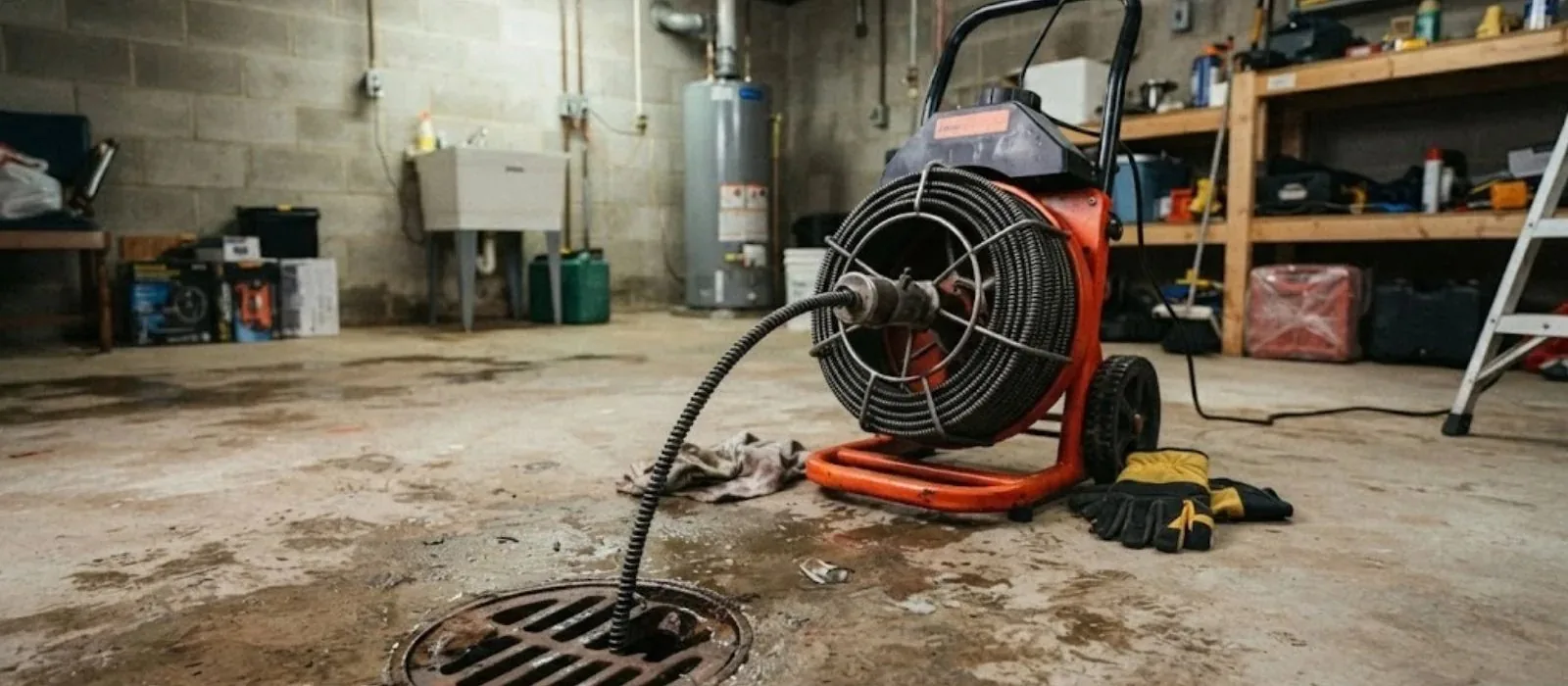
A drain that won't clear: what to do while you wait
.Drain cleaning Chanhassen residents call about most often is the plain, stubborn kind: a sink or tub that holds water and refuses to let go. It means removing whatever is blocking the pipe so water can leave the house again. Our dispatch line is open 24/7, so a clog at midnight gets the same answer as one at noon.
While you wait, stop running water into the blocked fixture. Pull the stopper or lift the strainer if you can reach the standing water with a cup, and bail it into a bucket. Keep chemical openers in the cabinet, because the plumber who arrives may have to reach into that water by hand.
When a clog counts as an emergency
.A single slow bathroom sink can wait for morning. Water rising in a tub when you flush, a basement floor drain bubbling, or sewage smell coming up through any opening is different. Those mean the blockage sits in the main line and every fixture upstairs is sending water to the same stuck spot.
In that case, stop using toilets, showers, the dishwasher and the washing machine at once. Every gallon you add has nowhere to go but the lowest drain in the house. Call the 24/7 line, and tell dispatch which fixtures are affected, because that detail shapes what goes on the truck.
Kitchen sink clogs: grease, food and the disposal
.Kitchen lines clog differently from bathroom lines. Cooking fat goes down warm and liquid, then cools on the pipe wall and traps coffee grounds, rice, eggshell bits and fibrous scraps. Over months the opening shrinks to a straw, and one more dinner closes it.
A garbage disposal makes this worse in a quiet way. It chops food small enough to travel, but it does not dissolve fat. If both sides of a double sink fill when you run the disposal, the blockage is past the shared trap, often in the horizontal run behind the wall. If only the disposal side backs up, the jam may be at the disposal outlet. A repair visit from our disposal service can sort that out.
Tub and shower drains: hair, soap and slow trickles
.Bathroom drains fail the opposite way. Hair wraps around the stopper linkage or the crossbar, catches soap film, and builds a gray mat that thickens by the week. The first sign is a shower that leaves your ankles wet, then a tub that takes an hour to empty.
Many of these clear with a small hand auger run through the overflow or drain opening, then a clean-out of the stopper hardware. If the water is slow in the tub and the sink beside it, the blockage has moved downstream and the job gets bigger. Floor drains and yard drains are cleared with the same cable tools, though they often need a camera look because they connect to the main line.
One fixture or the whole house? The first fork
.This question decides almost everything about the visit. One fixture draining badly points to its own trap or branch line. Several fixtures slowing together, especially the lowest ones, points to the main line, and that is a different tool, a different access point and often a longer job.
Traps and vents are where the plumbing code meets a clogged drain. Minnesota's code starts from the 2018 Uniform Plumbing Code (UPC) and generally expects every fixture to have a trap and a path for air behind it. If gurgling hints at a venting fault, the plumber can say what applies to your house.
| What you see | Likely location | Usual first step |
|---|---|---|
| One sink slow, others fine. | Trap or branch line under that sink. | Clear the trap, then run a small cable. |
| Both sides of a kitchen sink full. | Shared line behind the wall. | Cable the kitchen branch from the cleanout or trap arm. |
| Tub gurgles when the toilet flushes. | Shared bathroom branch. | Cable the branch, then check the vent if it persists. |
| Basement floor drain bubbles when upstairs fixtures run. | Main line downstream of the branches. | Cable or jet the main from the cleanout. |
| Toilet, tub and floor drain all slow together. | Main sewer line or lateral. | Main line cleaning, then a camera look. |
| Damp stain or smell near a pipe, no clog. | Leaking drain line. | Camera or pressure test before any cutting. |
Ring dispatch and name the fixtures that have stopped draining. A licensed plumber will say which valves to close before the truck pulls up.
Snaking, cabling or jetting: which tool, and why
.A hand snake is a coiled steel cable with a small head, good for sink and tub clogs close to the fixture. It punches a hole through the blockage and restores flow, but it can leave a grease coating behind on the pipe wall. A motorized cable is thicker and carries cutting heads, which makes it the usual choice for branch lines and for roots in a lateral.
Jetting uses high-pressure water to scour the full pipe wall, which is why it suits grease, scale and repeat clogs. It is not right for every pipe, though. Brittle or collapsed pipe can break under pressure, so a camera look often comes first on older lines. You can read how that decision works on the hydro jetting page.
A good plumber tells you which tool is going in and why. If the first pass with a cable comes back clean and the clog returns in a week, ask about a camera inspection rather than a repeat of the same cut.
Hard water, scale and the age of the house
.Chanhassen's well water comes out hard, a level with the city citing 21 grains per gallon, and city staff point out that a softener helps most households. Minerals at that level leave scale on pipe walls and turns bar soap into a sticky curd that clings to the same hair mat. If your house has no softener, drain lines narrow slowly, so a cable cleaning may need to be repeated more often than in a softened home.
Housing age matters too. Chanhassen became a city in 1967 and most housing followed, so plenty of drain lines in town are modern plastic that a cable clears without a fight. Older lots near downtown along West 78th Street may still have cast iron or clay in the ground, which rusts rough on the inside and catches debris. Ask the plumber what material they see and what it means for the next cleaning.
When the drain line itself leaks
.Sometimes the water is going the right way and still ending up in the wrong place. A leaking drain line shows up as a stain on a ceiling below a bathroom, a soft spot beneath a tub, or a musty smell with no visible wet. It rarely leaks all day, because drains only carry water when something is running.
That makes the leak hard to catch. A plumber may run water through the line while watching with a camera or a moisture meter. If the pipe is cracked or separated, cleaning will not fix it, and the next step is a repair. For lines under the slab or yard, see sewer line repair.
Ready the house first
.A few minutes of prep saves time on site and keeps the mess small.
What drives the cost of drain cleaning
.Drain jobs run from a quick trap clearing to a long main-line cut, so the final number depends on the details below. Expect the number to be spelled out first, and the job waits for your approval.
Homeowner's insurance often covers sudden water damage but may not cover the clog itself or wear on old pipes. Policies differ, so read yours or ask your agent before assuming either way.
A figure that fits your pipes starts with a description of the symptoms, which the dispatcher can walk through with you over the phone.
What not to do with a stopped drain
.- Do not pour chemical drain openers into standing water. They can burn skin, damage some pipes and put caustic liquid in the plumber's hands.
- Do not keep running the fixture to see if it will clear. The water has to go somewhere.
- Do not force a plunger on a toilet that is rising together with a tub. That pattern is a main line problem.
- Do not dig in the yard to find a cleanout without calling 811 first. Gopher State One Call marks buried utilities for free.
- Do not pull apart a trap over a bare floor. Put a bucket under it, because the trap holds more water than it looks.
Choosing a plumber for a drain job
.State law keeps drain and sewer work with licensed plumbers, or with workers a licensed contractor supervises. Before anyone opens a cleanout in your house, look the name up in the state's online license search. The rulebook behind the work is chapter 4714 of Minnesota Rules.
Drain cleaning rarely needs a permit, but replacing a section of pipe might. Ask the city's inspections office about your specific job before any pipe gets swapped out. If the problem keeps coming back, a sewer camera inspection shows what a cable cannot.
We also dispatch to nearby towns, including Chaska, whose city water is even harder than Chanhassen's. Hard water there makes a regular cleaning schedule more useful.
Drain cleaning questions, answered
.Yes. At any hour: a 3 a.m. backup or a holiday clog reaches a live dispatcher.
Name the fixtures that are affected and say whether water is rising. A backup into a basement floor drain gets handled with more urgency than one slow bathroom sink.
It is better not to. Openers rarely clear a full blockage, and if the water sits there, the plumber has to work around caustic liquid.
A plunger, a hand auger or a call is a safer first move.
A basic cable clearing often punches a hole through the clog but leaves grease on the pipe wall. The new layer builds back fast.
Ask about jetting for grease-coated lines, or a camera look if the same spot keeps closing.
Run water at the lowest fixture while the others are off. If a basement floor drain or first-floor tub gurgles when an upstairs toilet flushes, the main line is the suspect.
If only one fixture is slow, the blockage is probably in its own trap or branch.
Usually yes, with a cable or a small jet head. Floor drains often connect to the main line, so a camera check is worthwhile if one backs up.
Yard drains that handle roof or surface water may involve other lines, which the plumber will identify on site.
It contributes. Chanhassen's untreated water is about 21 grains per gallon, and hardness leaves scale and soap curd that narrow pipes slowly.
A softener helps, and the city notes most residents benefit from one. Test your tap or ask the city if you are unsure.
Clearing a clog normally does not, but replacing pipe may. If a pipe swap comes up, the city's inspectors can say what your address needs.
Pick up the phone before the water reaches the rim. Dispatch can book a licensed plumber for the same day when the schedule allows, with the price agreed before any tools come out.