
What basement waterproofing means for a plumbing company
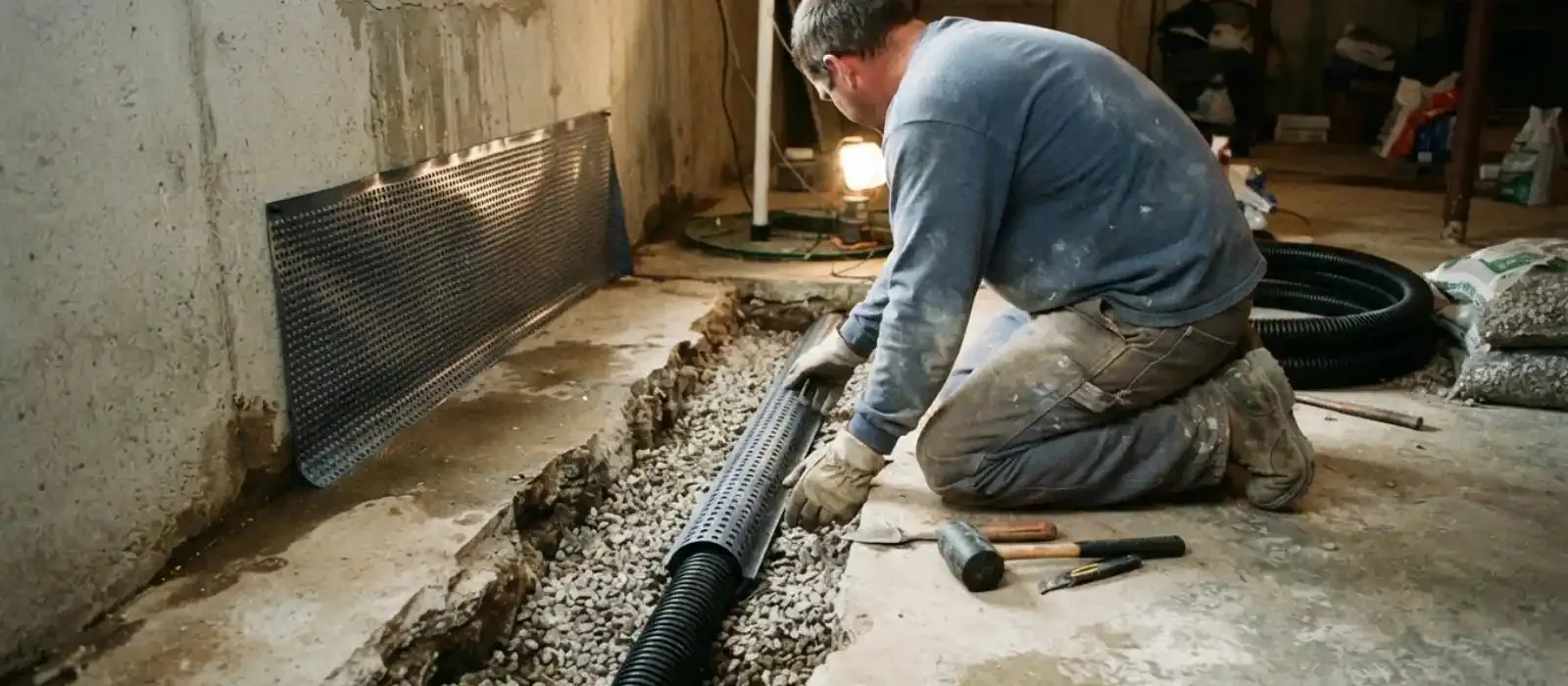
.Basement waterproofing in Chanhassen is the work of keeping groundwater and surface runoff out of your living space, or moving it out quickly once it gets in. A plumber's side of that job is drainage: interior drain tile, sump pits, pumps, discharge lines and backwater valves.
That is a narrower job than many ads suggest, and it is worth saying so up front. Sealants, wall coatings and crack injection are surface treatments. Structural repair belongs to a foundation specialist. What we do is give water a path to leave. If you already have water on the floor, the 24/7 line is open and a plumber can start with the pump and pit.
Where the water actually comes from
.Most wet basements have more than one source, and the cheapest one to fix is usually outside. Water finds its way in when the ground tilts toward the house, when downspouts empty beside the wall, or when a window well fills like a bucket with no drain at the bottom.
Then there is the joint where the floor slab meets the wall. It is a natural seam, and when the soil around the footing is saturated, water pushes up through it. Cracks in the slab and gaps around pipe penetrations are the other common entry points.
Lakes dot the city, and plenty of lots stay soggy after a slow spring melt or a week of storms. If your basement is in low ground or near a lake shore, expect the water table to rise with the season. That is a reason to plan for a sump pit rather than hope the basement stays dry without one.
Fix these outside problems before paying for drainage work
.- Extend downspouts so they discharge several feet from the foundation, not at the wall.
- Check that the soil slopes away from the house and has not settled into a bowl along the foundation.
- Clear leaves from gutters. An overflowing gutter dumps water straight at the wall.
- Look at window wells. They need clean gravel or a working drain at the bottom, and a cover helps in heavy rain.
- Find where a sump discharge line ends. If it empties right beside the house, the same water can cycle back into the pit.
These are not glamorous, but they cost little and they often cut the amount of water the interior system has to handle. A plumber who recommends them first is giving you honest advice.
Exterior drain tile or interior drain tile
.This is the main decision on a planned project. Both approaches collect water near the footing. They differ in where the work happens and how much of your property gets disturbed.
| Point | Exterior drain tile | Interior drain tile |
|---|---|---|
| Where the work happens. | Outside, along the foundation wall. | Inside, along the basement floor edge. |
| Disruption. | Excavation, landscaping and hardscape often torn up. | Floor edge cut open, then repaired with new concrete. |
| Before digging. | Call Gopher State One Call at 811 for utility marking. | Not usually needed for the floor work, but check for lines near the exterior discharge. |
| What it treats. | Water before it reaches the wall. | Water at the footing and under the slab edge. |
| Drains to. | Daylight, storm drain where allowed, or a sump pit. | A sump pit and pump in nearly all cases. |
| Best fit. | Open yards, access on all sides, or a wall already exposed for other work. | Finished yards, decks, patios, tight lot lines. |
| Trade-off. | Higher disturbance and cost drivers outdoors. | Concrete dust and a few days of noise indoors. |
Whichever way you go, ask what happens to the tile once it fills with silt and roots over the years. Good designs include cleanouts or inspection ports so the line can be flushed. Ask the plumber to show you where they would go.
The sump pit and pump are the working end of the system
.A drain tile loop does nothing useful if the water has nowhere to go. In most basements the loop empties into a pit set below the slab, and a pump lifts the water out through a discharge line to a point away from the house. When a pump fails during a storm, the pit overflows and the basement floods regardless of how good the tile is.
Pit depth, pump capacity, a check valve on the discharge line, and a backup option such as a second pump or a battery system are all worth discussing. If you already have a pit and the pump runs constantly, short cycles, or makes a rattle, repairing or replacing the pump is often the fastest way to stop a recurring wet floor.
A flooded basement is a call for the 24/7 line. A plumber can check the pit, the pump and the discharge before the next round of rain.
Backwater valves and the sewer side of a wet basement
.Not all basement water is groundwater. When the municipal sewer or your own lateral backs up, water can come up through the lowest drain in the house, which is often a basement floor drain. That is sewage, not rainwater, and it is a health hazard.
Backwater valves are a code item. Minnesota's plumbing code takes its model from the Uniform Plumbing Code (UPC), whose provisions often call for backwater valves to stay reachable for cleaning and for low fixtures to be protected from sewer backup. Ask the plumber whether your floor drains need one, and ask the city's inspectors about any local wrinkles.
A backwater valve installed on the sewer line closes against reverse flow. It is a mechanical part and needs periodic cleaning so a stuck flap does not defeat it. If your sewer line has roots or repeated slow drains, cleaning the line before and after the valve goes in keeps the system honest.
A valve also changes how the house drains when the sewer is surcharged. Ask the plumber to explain which fixtures sit above the valve and which are below it, because fixtures downstream of a closed valve cannot drain until it reopens.
Hidden leaks that look like groundwater
.Sometimes a damp floor is not coming from outside at all. A weeping supply line under the slab, a failing drain pipe, or a water heater leak can mimic seepage. If the dampness appears in a dry season, or the floor stays wet near a bathroom or utility room wall, suspect a pipe.
A leak detection visit separates plumbing water from groundwater using pressure checks, moisture tracing and, where appropriate, a camera. It takes less time than excavating the wrong wall.
Foundation cracks and what a plumber can and cannot do
.Hairline cracks that stay put are common in poured concrete, and they are often a place where water seeps. A crack that is widening, stair-stepped in block, or paired with a bowing wall is a structural question. That needs a foundation or structural specialist, and drainage work alone will not solve it.
A plumber can tell you whether water is coming through the crack or around it, and can set up drainage to relieve pressure. We will say so plainly if the job belongs to another trade.
Dehumidifiers and sealants are a different tool
.Dehumidifiers manage humidity. They help a basement feel less clammy, and they can protect stored items. They are not a fix for water entering as liquid, and running one nonstop is a sign to track the source.
Surface sealers painted on a wall can slow vapor but often peel when water pressure builds behind them. Treat them as a cosmetic finish, not as drainage.
What drives the cost of basement drainage work
.Basement waterproofing is a planned project and the price depends on the house. The number comes after someone has walked the space, and you hear it before any digging or cutting.
Water damage from a flood is often a separate insurance matter from the drainage fix. Many homeowner policies treat sudden pipe failures, sump pump overflow and groundwater seepage differently, so read your policy and ask your agent before assuming a claim will or will not apply. Take dated photos of the water line and any damaged items before you move them.
Describe the stains, the sound of the pump and where the water shows up when you phone in, and the scope of a first visit gets clearer.
Permits, licensing and who should do the work
.Chanhassen's building page lists permits for many projects, including alterations, so a drain tile or pit job may need one. Contractors working on homes must hold a state license, and the plumbing portion has to be done by licensed or registered workers.
Type any bidder's name into the state labor department's license search before you sign. The pit, pump and discharge piping fall under the Minnesota plumbing code, adopted in Rules chapter 4714.
If a project involves new drain pipe or fixtures, say so when you ask the city about permits. If the scope includes adding a floor drain or a bathroom rough-in, new plumbing installation is part of the picture and affects what gets inspected.
A sensible order for a wet basement
.Stop the source you can see
Fix downspouts, grading and window wells first. These cost the least.
Check the pit and pump
If a pit exists, confirm the pump runs, the float moves and the discharge line is clear.
Rule out a plumbing leak
Dampness in a dry week points to a pipe, not groundwater.
Pick a drain tile route
Interior or exterior, based on access, yard and budget.
Add protection on the sewer side
A backwater valve and a clean line prevent the worst kind of basement water.
Basement waterproofing questions from Chanhassen homeowners
.Both trades touch it, and they do different parts. A plumber handles drain tile connections, the sump pit, the pump, the discharge line and backwater valves. A foundation or structural specialist handles cracks that move, bowing walls and settling.
If a wall is pushing inward or a crack is widening, call a structural specialist first. Water control will not fix a wall that is failing.
It depends on the house. Exterior tile treats water before it reaches the wall but requires digging down along the foundation. Interior tile catches water at the footing from inside and is usually less disruptive to the yard.
Many homeowners with finished landscaping choose interior tile for that reason. A site visit should look at access, soil, and what is already buried along the wall.
Almost always, yes. Drain tile collects water, but the water still needs somewhere to go. In most basements the pit and pump are that destination, and they lift the water out to a discharge point away from the house.
It can help. A backwater valve is a one-way flap in the sewer line that closes when flow reverses. It does not clear a clog, and it needs to be opened and cleaned from time to time so debris does not hold the flap open.
Ask whether your sewer lateral should be cleaned or inspected when a valve is installed. That is the moment to check the line while it is open.
Possibly. Chanhassen's permit page says many projects need one, so the building inspections division is the place to ask before drainage work begins. The same page requires residential contractors to hold a state license.
No. A dehumidifier pulls moisture out of the air. It does nothing about liquid water entering through a floor joint or wall. If you run one constantly and still see damp spots or a musty smell, there is probably a water path to find.
Walk the outside first. Check downspouts, grading near the foundation and window wells, because those are the cheapest fixes and often the cause. If the water still shows up, the next step is a plumber's visit to look at the sump system and drains.
Tell the dispatcher where the dampness appears and they can say if it points to the pump, the drain tile or a trade outside plumbing.