
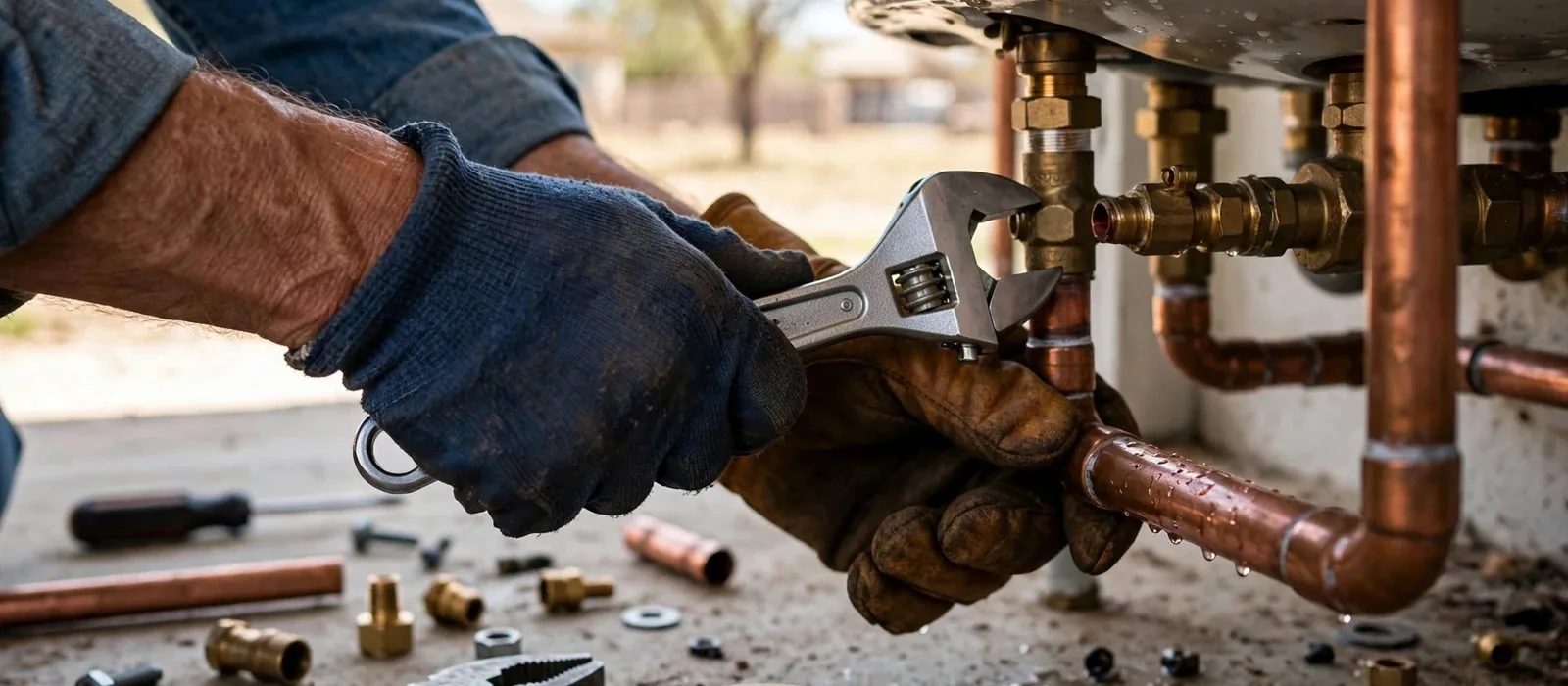
What a proper water heater installation includes
.Water heater installation for Chanhassen homes covers more than setting a tank on the floor. A proper install fits the heater into the plumbing, the fuel supply, the venting and the room around it. This page is for planned work: remodels, additions, fuel conversions, new construction and upgrades you choose on your schedule. The 24/7 line is open if plans change, but nothing here has to be rushed.
- Shutoff valves on the cold supply so the heater can be isolated for service.
- Flexible or dielectric connectors that keep dissimilar metals from corroding at the joints.
- A relief valve rated for temperature and pressure, plus a discharge line that ends in a safe spot.
- An expansion tank when the system is closed and the code or the maker calls for one.
- For gas units, a code-compliant vent, a manual gas shutoff, a union and a sediment trap on the gas line.
- A drain pan with a piped drain where a leak would damage finished space.
Each item has a reason. The relief valve protects against overpressure. The sediment trap keeps debris out of the gas control. The shutoffs save your floor during the next service call.
Where the heater goes in a Minnesota home
.Because most Chanhassen housing dates from after the 1967 city formation, a typical heater sits in a basement mechanical room or a main-floor utility closet. Both work, with different tradeoffs.
A basement spot keeps leak water away from living space and usually has a floor drain close by. A main floor closet adds convenience for short pipe runs but raises the stakes if the tank ever leaks. In either case the location needs clearance for service, a flat and dry surface, a route for the relief valve discharge and, for fuel-burning units, safe venting and enough air.
Garages are possible but cold. A heater in an unheated space needs freeze protection on the pipes, and gas units in garages have additional safety requirements. A plumber walks through the options with you before picking a spot.
| Consideration | Gas tank | Electric tank | Heat pump tank |
|---|---|---|---|
| Venting. | Required to the outdoors. | None. | None, but needs air volume. |
| Energy hookup. | Gas line, shutoff and trap. | Dedicated circuit and breaker. | Dedicated circuit, often smaller draw. |
| Clearance. | Around the vent and burner area. | Access to panels. | Space for airflow and filter access. |
| Condensate. | Rarely. | None. | Yes, needs a drain or pump. |
| Room effects. | Draws combustion air. | Neutral. | Cools and dehumidifies the room. |
If you are choosing between a tank and an on-demand model, tankless water heaters have different venting and flow rules worth reading about first.
Call and tell us the room, the fuel and the timeline. We will help you plan the rough-in and the schedule.
Planning ahead beats the emergency swap
.A heater installed on your timeline gives you choices. You pick the type, line up the venting, clear the space and compare options without a flooded floor adding pressure. Emergency swaps are possible, but they usually mean taking whatever is on the truck that fits.
If the old tank is past its expected life but still working, that is the best time to plan. If it has already failed and is spilling water, read about emergency replacement instead. The two services overlap, but the planning side is what this page covers.
Getting the space ready
.A little preparation saves time on the day. Clear a path of about three feet from the entry to the heater so the crew can walk in with equipment. Move storage boxes and shelving away from the old tank and the new location. Make sure someone over eighteen is home to approve the work.
- Locate the main water shutoff and show the installer.
- Clear shelves, boxes and holiday decorations from the work area.
- Know where your electrical panel is and whether it has room for a new breaker.
- Put pets in a room away from the work area.
- Have the old unit's data plate details handy, or take a photo.
Permits and inspections
.The rulebook for installs is Minnesota Rules chapter 4714, a state code that adapts the 2018 Uniform Plumbing Code and has applied since December 2021. Whether your install needs a permit depends on the project, so confirm with inspectors at the city before you book.
Plumbing here is reserved by state rules for licensed or registered people, and for staff of licensed contractors. The online license lookup run by the state labor department lets you verify who is on the job. Ask who is pulling the permit, if one applies, and who will meet the inspector.
What an inspector or a careful plumber checks
.- Relief valve rating matches the tank and the discharge pipe is the right size and slope.
- No threaded plug or cap on the relief line.
- Water connections tight, supports in place, no weeping at any joint.
- Gas connections leak-tested, vent pitched and sealed correctly.
- Electrical connections made by a qualified person where required.
- Clearances kept for service and combustion air.
Hard water counts here too. Municipal water in Chanhassen is hard, close to 21 grains per gallon on the city's published numbers, and nobody softens it before it reaches you, so scale starts building on day one. Pairing the install with a softener or filter can protect the equipment, or you can plan a yearly flush.
A new heater is judged against the plumbing code, and in Minnesota that code takes its model language from the Uniform Plumbing Code (UPC). Inspectors generally look at relief valve discharge, shutoff valves and whether thermal expansion has been handled. Ask the installing plumber which items fit your setup, and call the city's inspections division if you want to know how the visit works.
What to do if something looks wrong after the install
.- If water pools around the base, close the cold supply valve on top of the heater and call the same day.
- If the relief valve discharge pipe is running, do not cap it. Shut off the power or gas and call for a plumber.
- A gas odor near the unit means everyone walks outside without touching light switches, and then the gas utility or 911 gets the call.
- If the water comes out scalding or never gets warm, turn the thermostat to a mid setting and ask the installer to recheck it.
- Photograph the nameplate and any visible leak before the plumber arrives, so the visit starts with facts.
What affects the price of a new install
.Installation quotes vary because every house is different. Scope and price are settled together before anyone starts.
Planned upgrades are not usually an insurance claim. A sudden failure that damages the home is a different matter, so keep records of the old unit and any damage.
Describe the room, the fuel and the timeline to the dispatcher for a figure that fits. A licensed plumber can outline the options in plain terms.
Questions about installing a water heater
.Yes, in scope. A replacement swaps an existing heater in the same spot. An installation covers new locations, new fuel types, new construction, additions and remodels, and often means new piping, venting or electrical work. If your old tank has already failed and you just need it swapped, the replacement page fits better.
It depends on the model and the code. A tank needs clearance for service access, a drain, and space around the vent. Heat pump units need open air volume. Tankless units mount on a wall but need venting or a high-amp circuit. A plumber measures the space and checks the manufacturer's instructions before choosing a unit.
Often, yes. The challenge is the plumbing, gas, electrical and venting runs to the new location, plus drain access. Moving a gas unit may require a new vent route. Moving to a finished space usually calls for a drain pan and a safe path for leak water.
A drain pan is a smart addition anywhere a leak could damage finished floors, ceilings or living space. The plumber can tell you whether the code or the manufacturer requires one for your layout. In a bare concrete basement with a floor drain, it may be optional.
That depends on the project, and a call to city inspectors will settle whether yours needs one. Many installs involve inspections, and a licensed plumber can explain what to expect for your job and who handles the paperwork.
Yes, and it helps to talk early. Rough-in work such as supply lines, venting and electrical circuits often happens before walls close. Share your plans, the fuel you want and the mechanical room layout, and the plumber can work out a sequence.
Same-day appointments when available. Call the 24/7 line and describe the room and the fuel you have in mind.