
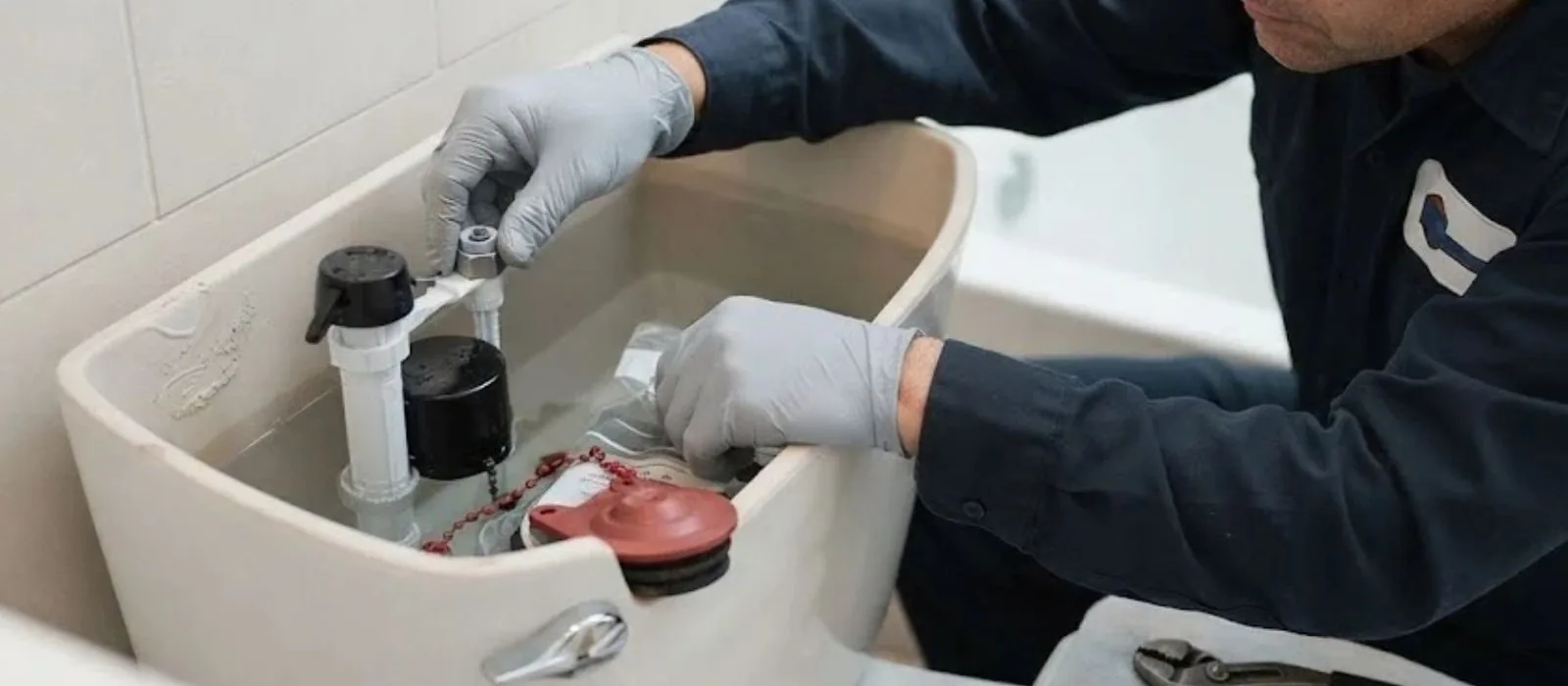
Overflowing toilet in Chanhassen: do this first
.Toilet repair Chanhassen households ask for at 2 a.m. usually begins the same way: the bowl is climbing and the floor is next. The line is open 24/7, and the steps below buy you time while a plumber is on the way.
- Lift the tank lid and push the rubber flapper down into its seat. That cuts off the water that keeps dropping into the bowl.
- Turn the small oval handle on the supply valve behind the toilet clockwise until it stops. If it spins loose or will not budge, close the main water valve for the house instead.
- Pack towels around the base and keep the seat down so splashes stay put.
- Do not flush again to see whether it cleared. A bowl that is already full takes another full tank with each flush.
Once the water has stopped, call. A clog sitting in the trap is a short visit. Water that also shows up in a tub or shower drain points further down the line, and that case is covered a bit later on this page.
Water around the base of the toilet
.A puddle at the foot of a toilet has three usual sources. A cold tank can sweat in summer and drip onto the floor, which looks bad but harms nothing. A loose supply connection leaks at the valve or the tank bolts. The third is the seal under the bowl, and that is the one worth worrying about.
That seal is a wax ring (or a wax-free version of it) squeezed between the toilet horn and the closet flange, the ring fastened to the floor. If the closet bolts work loose, or the flange is cracked or sits lower than the finished floor, the seal lets go. Then every flush pushes a little wastewater out onto the floor.
Subfloor damage is where the real cost hides. Plywood under vinyl or tile soaks up a slow leak for months, and by the time the floor feels soft the rot has spread past the toilet. Stains on the ceiling below, a toilet that rocks, or a sour smell near the base are all reasons to stop using it and call the same day.
Running water, hissing and phantom flushes
.A toilet that refills on its own every few minutes, hisses after a flush or runs on and on is leaking from the tank into the bowl. The usual causes are a warped or dirty flapper, a chain that is too tight or too loose, a fill valve that no longer shuts off, and a float set so high that water spills down the overflow tube.
Here is a simple test. Put a few drops of food coloring in the tank and wait 20 minutes without flushing. Color in the bowl means the flapper is leaking. Because the water slips away quietly, one bad toilet can waste a surprising amount and only announce itself on the next water bill. If a bill jumps and the toilet checks out clean, a leak detection visit can look for a hidden loss elsewhere.
Flappers and fill valves are inexpensive parts, and most swaps finish in one visit. A cracked tank, or old brass-and-ball hardware that nobody makes parts for anymore, tips the decision toward a new tank kit or a new toilet.
Shut the supply valve, then call the 24/7 line. The person on the line can talk you through what to do next while a plumber is assigned.
Clogs: plunger, auger, or a bigger problem
.A flange plunger, the kind with a rubber sleeve that pokes into the drain opening, moves far more water than the flat cup made for sinks. Seat it gently first, then pump with steady strokes. Most paper clogs give way within a few minutes.
If plunging gets nowhere, a closet auger is the next tool. Its short cable has a protected tip that reaches the bend inside the bowl without scratching the porcelain. Wipes, a child's toy and wads of thick paper are the usual finds. Skip the long hardware-store snake, which can chip the bowl.
Pay attention to what else is happening. A toilet that gurgles when the washer drains, a floor drain that bubbles, or two fixtures that are slow at once all suggest the blockage sits in the branch line or the main. That is drain cleaning work, and plunging harder only shoves wastewater back toward the bowl.
Weak flush and mineral scale
.Hardness shows up in a toilet before it shows up almost anywhere else. The city reports 21 grains per gallon and treats only for iron and manganese, so minerals stay in the water and build white crust in the rim jets, the small holes under the rim that feed the bowl, and on the flapper seat. Clogged jets give a lazy, lopsided swirl, and a crusty seat leaks.
If your flush has weakened over the years, mineral scale is a likely suspect, and a descaling visit may save you a new toilet.
Other causes of a feeble flush are a low water level in the tank, a flapper that closes too early, and, less often, a partly blocked roof vent. A plumber checks them in that order, starting with the cheapest.
Replacing or installing a toilet
.Before shopping, measure from the finished wall behind the toilet to the center of the floor bolts. Twelve inches is the common rough-in. Ten and 14 inch layouts exist, and a toilet built for 12 will not sit correctly on a 10 inch flange.
A replacement toilet is a small job that still touches the plumbing code. Minnesota's rules follow the Uniform Plumbing Code (UPC) with amendments, and inspectors generally look for a secure fixture, a sound drain connection and a working shutoff. The plumber confirms what applies to yours.
Elongated bowls run longer front to back and many people find them more comfortable, but check the clearance in front of the door. Taller comfort-height models usually put the seat around 17 to 19 inches off the floor, which is also the ADA range. WaterSense labeled toilets commonly use 1.28 gallons per flush, and many clear a bowl well.
A proper install means a new wax ring or seal, a new supply line, shims under the base if the floor is out of level, and bolts snugged evenly. Cranking them down cracks the porcelain. Moving a toilet to a different wall, or adding a bathroom, is a plumbing installation project with new drain and vent runs, and the city's building inspections division can say whether a permit applies before the first cut.
Repair or replace: a quick guide
.| What you see | Likely fix | When a new toilet wins |
|---|---|---|
| Runs after flushing. | New flapper or fill valve. | Tank is cracked or hardware is obsolete. |
| Leaks at the base. | New wax ring, bolts, maybe a flange repair. | Bowl is cracked or the porcelain base is chipped. |
| Rocks side to side. | Shims and bolt tightening. | Flange is broken and the floor is soft. |
| Weak flush, one-sided swirl. | Clean rim jets, adjust water level. | Jets are scaled over and the model is old. |
| Repeated clogs. | Auger the trap and check the line. | Older high-volume model keeps failing. |
| Sweating tank. | Anti-sweat liner or mixing valve. | Rarely a reason to replace. |
What shapes the price of a toilet visit
.Toilet work ranges from a ten-minute flapper swap to pulling a toilet to rebuild the floor under it. Once the plumber has seen the fixture, you hear the price before any parts come out.
Sudden overflow damage is often something a homeowner's policy treats differently from a slow leak. Photograph the water line and the damaged area before cleanup, and keep any parts that were removed.
Tell the dispatcher whether the bowl rocks, runs, leaks or backs up, and the answer gets more specific.
While the plumber is on the way
.A few minutes of prep makes the visit shorter and keeps the damage from spreading.
What a toilet visit does not include
.A plumber repairs the fixture, the seal and the pipes that serve it. Rotted subfloor, new tile and a stained ceiling below belong to carpenters and finish trades. Expect the plumber to mark where pipe work stops.
A seized or leaking shutoff valve is part of the job, and the same skills cover sink and faucet repair if the bathroom has other problems. The state's online license lookup lets you confirm a name before the door opens. Setting a toilet falls under Minnesota's adopted plumbing code, the same rulebook inspectors use.
Toilet repair questions from Chanhassen homeowners
.Yes. Calls are answered around the clock, holidays included, and a plumber goes to the house when the bowl will not wait. Lesser faults like a ghost flush can often be booked the same day.
If the bowl is overflowing, close the supply valve behind the toilet before you call.
Most often the flapper no longer seals, the chain is the wrong length, or the fill valve has worn out. Food coloring in the tank is a quick way to tell: if color reaches the bowl, the flapper is the leak.
Light rocking is often a loose bolt or a missing shim. Left alone, it works the wax seal loose and lets wastewater seep under the base.
If the rocking is new or the floor feels soft, stop using it until a plumber has looked.
Sometimes, if the bolts were loose. Tighten them gently and evenly, because porcelain cracks under force. If the leak continues, the wax seal or flange needs attention.
It rarely ruins one, but hard water at the city's level leaves mineral crust in the rim jets and on the flapper seat over time. A softener or occasional descaling keeps flushes strong.
If only the toilet is slow, the clog is probably close by. If a tub gurgles, a floor drain backs up or several fixtures are slow together, the blockage is deeper and calls for line cleaning.
Search the name on the state labor department's license lookup. It lists plumbers and contractors and shows whether the license is current.
Say what the bowl is doing and the dispatcher can sketch the likely visit, from a new flapper to a full reset, before anyone drives out.