
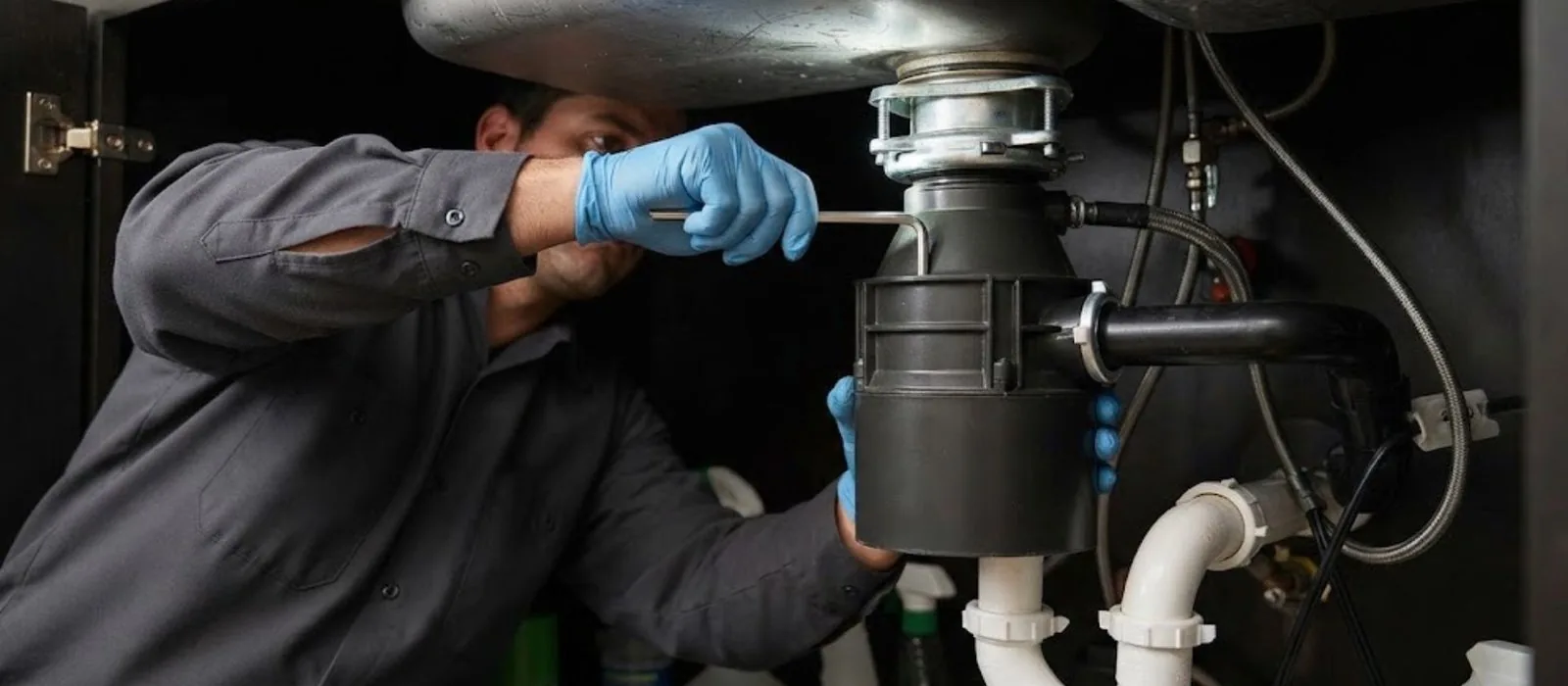
What makes a double sink different
.A double sink garbage disposal installation starts the same way as a single-bowl job, but the plumbing underneath looks different. One bowl gets the disposal. The other still needs a drain that reaches the same trap without creating a low spot where water sits.
That is the whole reason this project trips people up in Chanhassen kitchens. The disposal is the easy part. The tailpiece, the horizontal waste arm and the trap are where leaks and slow draining come from.
Parts that decide how the job goes
.Before anyone touches a wrench, lay out what you have. A disposal, a sink flange and mounting ring, a discharge elbow, a continuous waste fitting, tailpieces, slip nuts and washers, a trap, and plumber's putty all play a part.
| Part | What it does | What to check |
|---|---|---|
| Sink flange and mounting ring. | Seals the bowl opening and holds the disposal up. | Putty seat is even, no gaps around the rim. |
| Discharge elbow. | Carries ground waste out of the unit. | Gasket is seated and the bolts are snug. |
| Continuous waste fitting. | Joins the second bowl's tailpiece to the disposal outlet. | Slopes toward the trap, not away from it. |
| Dishwasher inlet and knockout. | Lets the dishwasher drain through the disposal. | Plug is removed, hose has a high loop. |
| P-trap. | Holds a water seal against sewer gas. | Aligned with the wall stub, no stretched joints. |
Setting the disposal below the first bowl
.Remove the old strainer or disposal first, then clean the drain opening of old putty. Press a rope of fresh plumber's putty under the new flange, set it in the bowl and tighten the mounting hardware from below until putty squeezes out evenly. Trim the excess with a plastic scraper.
Hang the disposal from the mounting ring according to the maker's directions. Most models twist into place and lock. Rotate the unit so the outlet points toward the second bowl before tightening, because the waste arm will connect there.
Joining the second bowl with a continuous waste
.A continuous waste is a short horizontal tube, often fitted with a baffle on one side. It runs from the second bowl's tailpiece to the disposal outlet, and from there the combined flow heads for the trap. The tube must slope gently toward the trap so water cannot pool.
Dry-fit everything before tightening a single nut. Measure from the tailpiece down to the trap arm and cut pieces to length with a pipe cutter or hacksaw. A joint pulled to fit instead of cut to fit will weep, usually within a week.
Dishwasher drain and the knockout plug
.If the kitchen has a dishwasher, the drain hose attaches to a small nipple on the disposal. That nipple is often capped by a plug inside. Knock it out with a screwdriver and a light tap, then fish the loose plug from the chamber before closing things up.
Run the hose to a high loop under the counter before it meets the disposal. That loop keeps dirty water from flowing back into the dishwasher.
Power, switch and safety
.Treat the electrical side with respect. Turn off the circuit at the panel and test the wires with a tester before touching them. A disposal usually either plugs into an under-sink outlet or is hard-wired through a junction box, and the cable should be protected where it passes through the cabinet.
Many kitchens use a wall switch near the sink for the disposal. If your cabinet has no outlet and no switch, a licensed electrician is the right person to add one. The plumber and the electrician can often be scheduled for the same day so the sink is not out of service for long.
The trap, the leak test and the first run
.Connect the trap last. Slide the slip nuts and washers over the pipe in the right direction, push the pieces together and hand-tighten, then snug them a quarter turn with pliers. Overtightening crushes plastic washers and causes leaks.
Fill both bowls with water and let them drain together while you run your hand along every joint. Dry hands find drips that eyes miss. Then run the disposal with the cold water on, and check again after ten minutes. Any seep needs a fix before you load the cabinet with cleaning supplies.
Our dispatchers can book a licensed plumber for the disposal, waste arm and trap in one visit. The price is stated before work begins.
Chanhassen kitchens and hard water
.Chanhassen homes were mostly built after the city formed in 1967, so a lot of kitchens have newer cabinets with a trap arm that lines up with the wall stub. Older layouts, with the stub offset or lower than modern pipe, may need an adjustable arm or a short extension to keep the proper slope. Measure before buying parts.
Hardness here runs 21 grains per gallon and the city does no softening. Scale then collects inside slip joints, around gaskets and on the chamber walls of a disposal, so a loose joint that wept last year may be crusted white this year. If the whole house is on unsoftened water, a softener helps the disposal, the faucet and the dishwasher together.
Where a plumber earns the visit
.Many homeowners can swap a like-for-like disposal. A first-time installation on a double bowl is a different job. Cutting into the waste line, resetting the trap arm or adding a vent for better drainage should be done by a licensed plumber, since drain slope and venting fall under the state plumbing code. Ask the Chanhassen building inspections division whether your layout change needs a permit.
A plumber can also help with new fixture installation if you are replacing the sink at the same time. If the old disposal is jamming, humming or leaking from the bottom, a repair visit may be a better first step than a replacement, and a plumber will tell you which makes sense.
Dispatch runs from Chanhassen to nearby towns. Homes in Victoria and Excelsior often have older cabinets and offset drain stubs, so mention the age of the house when you call.
Care that keeps a new disposal healthy
.- Run cold water before, during and for about 15 seconds after each use.
- Feed scraps in small amounts instead of one big load.
- Keep grease, coffee grounds in bulk, bones and fibrous stalks out of the unit.
- Grind a handful of ice now and then to knock off buildup on the walls.
- Never reach into the chamber. Use tongs and shut off the power first.
Questions about installing a disposal on a double sink
.Almost any residential disposal fits, as long as the sink has a standard drain opening of the right size. What changes with a double sink is the plumbing after the disposal, since the second bowl's drain has to tie into the disposal's outlet or into a trap arm with a proper slope.
That depends on what is already under the sink. If a switched outlet is in place, the disposal plugs in or is hard-wired to the existing circuit. If not, a licensed electrician may need to add one.
A plumber can handle the plumbing side and tell you which electrical work needs a second trade.
Many disposals have a small plug inside the dishwasher inlet. If the dishwasher will drain into the disposal, the plug must be knocked out before the hose is attached. If it is left in, the dishwasher cannot drain and will back up.
That depends on the system. Ask the city of Chanhassen or your septic installer whether food waste is a concern for your lot, and have the existing drain lines looked at before adding load. Grease and fibrous scraps are the usual problems in any home.
Most swaps on an existing sink are a short job, and a first installation on a double sink usually takes longer because of the extra waste connection and wiring. A plumber can give you a realistic window once they see the cabinet.
It can affect it over time. With hardness at 21 grains per gallon and no softening at the city plants, scale gathers in drain fittings and around seals. Running cold water during use and rinsing the unit now and then helps.
Tell the dispatcher how many bowls, whether a dishwasher is on the drain and whether an outlet exists under the sink. A licensed plumber can plan the visit from that.