
No heat in a Minnesota cold snap
.A boiler that quits in January is not an inconvenience. It is a race against frozen pipes, and boiler repair in Chanhassen is urgent work. Our line is open 24/7, and a licensed plumber can be sent while you handle the first few steps at home.
Start with the simple checks. Make sure the thermostat is calling for heat and set a few degrees above room temperature. Check the boiler's service switch and the breaker. Read the pressure gauge, and note any lights or codes. These details help the dispatcher and the plumber.
Then protect the pipes. Open the cabinet doors under kitchen and bathroom sinks on exterior walls so warm room air can reach them. Let a faucet drip a little on the coldest side of the house. If you use a space heater, plug it directly into a wall outlet, keep it clear of curtains and bedding, and never leave it running unattended. If you smell gas, leave at once and call the gas utility or 911.
How a hot-water heating system works
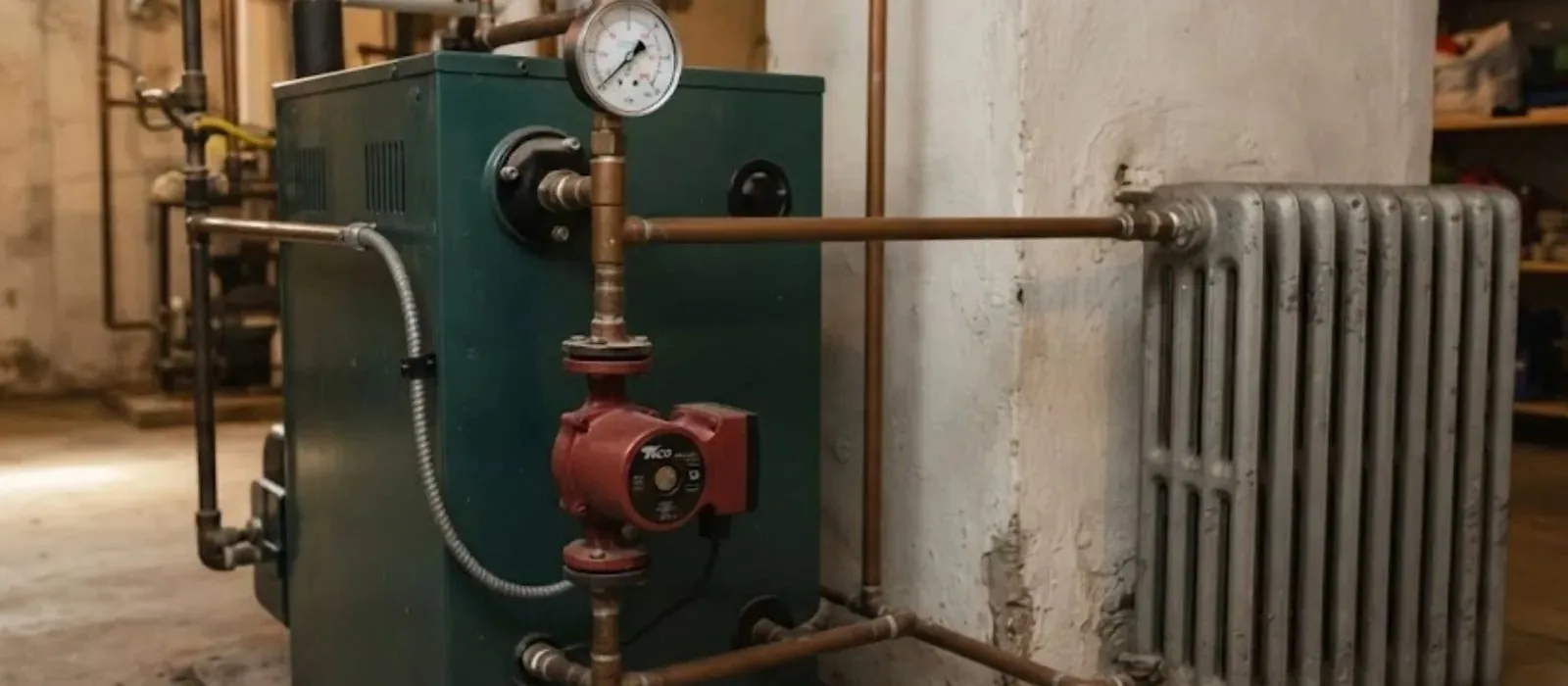
.Most homes with a boiler use hydronic heat. A cast iron or steel boiler warms water. A circulator pump pushes it through pipes to baseboard fin tubes, radiators or in-floor loops, and it returns to be heated again. Many houses split the pipes into zones, each controlled by a zone valve and a thermostat.
- The expansion tank gives heated water room to grow so pressure stays in range.
- The pressure relief valve opens if pressure or temperature climbs too high.
- The feed valve and backflow device top up the system with fresh water when needed.
- The air vent or separator pushes trapped air out so pipes carry water, not bubbles.
- The aquastat watches water temperature and tells the burner when to fire.
When one of these fails, the symptom might show up in a room far from the boiler. That is why a systematic check beats guessing.
What goes wrong and who fixes it
.| Symptom | Likely cause | Who usually fixes it |
|---|---|---|
| No heat anywhere. | No power, no fuel, ignition fault or tripped limit. | Plumber for power and water side, gas fitter or HVAC for burner. |
| One zone cold. | Failed zone valve, air lock or thermostat. | Plumber. |
| Pressure near zero. | Leak, failed feed valve or expansion tank. | Plumber. |
| Pressure too high. | Waterlogged expansion tank or overfeed. | Plumber. |
| Banging or kettle sounds. | Air, scale or low flow. | Plumber, sometimes HVAC. |
| Dripping relief valve. | Overpressure, overheating or a worn valve. | Plumber. |
| Short cycling. | Oversized unit, control fault or low water. | Plumber and HVAC together. |
Plumbers handle the piping, valves, pumps, expansion tanks and water-side controls. Burner tuning, combustion analysis and venting may involve a licensed gas fitter or an HVAC contractor. A plumber who tells you where that boundary sits is protecting you, not dodging work.
Tell dispatch what the pressure gauge shows and whether the boiler is firing, humming or silent. A licensed plumber will say what to close or leave alone until the truck arrives.
Why the pressure relief valve stays uncapped
.The relief valve is the safety valve on a boiler. If pressure builds beyond the rating, it opens and discharges water through a pipe. Capping the pipe or plugging the valve takes away the last line of defense.
A valve that drips occasionally may be reacting to a failed expansion tank, an overfeeding fill valve or a boiler running too hot. A valve that has leaked for months can leave mineral deposits on the seat and may need replacement. Never tighten a cap onto the outlet. Have a plumber test the tank and gauge, then decide on the valve.
Hard water, scale and the boiler
.A closed heating loop should not keep taking in new water, so scale is usually a lesser concern than in a water heater. But if a leak or a leaking fill valve keeps adding fresh water, that water brings its minerals along. Chanhassen's own listing puts its water near 21 grains per gallon, unsoftened. Each new fill leaves a little more scale on the hottest surfaces, which reduces efficiency and makes the unit noisy.
That is a good reason to look for the cause when a boiler keeps losing pressure. A system that stays sealed holds its water for years. A system that leaks quietly is replacing it all the time.
Bleeding, balancing and annual service
.Air in the system causes gurgling and cold spots at the top of radiators. You can bleed a radiator by opening its bleed valve with the boiler cool until water appears. Close it, recheck pressure at the gauge and add water through the feed valve if the system calls for it.
An annual service visit checks the controls, the relief valve, the expansion tank, the circulator and the water side of the system. Combustion checks and flue inspection are done by qualified gas and HVAC technicians. Scheduling both before the first cold week of the season avoids calling in an emergency.
When boiler trouble becomes an emergency
.This is urgent when the house has no heat in freezing weather, when water is pooling under the boiler, when the relief valve keeps discharging, or when soot or a gas smell shows up near the unit. A boiler that makes odd noises but still heats can wait for a daytime visit.
Before We Arrive
.A cold house gets colder fast. These steps buy time and give the plumber a head start.
If a pipe has already frozen or split, shut the main water valve and read about burst pipe repair while you wait. Hot water for showers during a boiler outage is a separate system in many homes, so water heater repair may be a second call if your tank is also acting up.
Standards and licensing
.The piping, valves and pumps on a heating loop are covered by Minnesota's plumbing rules, chapter 4714. A permit may apply to bigger heating work, and inspectors at the city can say when. For replacement or relocation of heating equipment, ask who will pull any needed permit and whether a gas fitter or HVAC contractor is part of the job.
Confirm a plumber's license in the state's online lookup before anyone opens the water side of the boiler. If your repair needs new piping, valves or a relocated pump, ask about plumbing installation for the planned side of the project.
What shapes the cost of boiler repair
.A failed circulator and a leaking heat exchanger are very different jobs. The price is laid out before the repair begins.
Homeowner policies often cover sudden water damage from a burst pipe or a leak, but usually not wear on the boiler itself. Photograph damage and keep failed parts.
For a figure that fits your system, give dispatch the gauge reading and the symptoms.
Boiler trouble questions answered
.Check the thermostat setting, the boiler's power switch and the circuit breaker. Look at the pressure gauge. A reading near zero usually means the system has lost water and the boiler will not fire.
If those look normal and the house is still cold, the problem may be the circulator, a zone valve, trapped air or an ignition fault. Call, and a plumber can narrow it down.
Yes. The line is open 24/7, including holidays and the coldest nights. A house that has lost heat in January is treated as urgent.
While waiting, open cabinet doors under sinks, let a faucet drip slightly on exterior walls and use space heaters only as the maker directs.
Many residential hydronic systems sit in a modest pressure band when cold, rising slightly as the water heats. The exact numbers depend on the system and the building height, so check the label or manual. A gauge that sits at zero or climbs far higher than usual deserves a call.
Trapped air, scale on the heat exchanger and low water flow are the usual causes. Air collects in high points and can be bled. A rumbling or kettle sound often means mineral deposits are causing localized boiling inside the unit. Hard water makes that more likely.
Many homeowners do. You need a radiator key or a flathead, a rag and a bucket, and you open the bleed valve until water, not air, comes out. Do it only when the boiler is cool. If the system keeps losing pressure or filling with air, the leak or the cause needs a plumber.
A licensed plumber handles the water side and the piping. Burner tuning, combustion analysis and flue work may need a licensed gas fitter or HVAC contractor. The plumber will tell you where the line falls so you are not left guessing about who to call next.
Short cycling can come from an oversized boiler, a failing thermostat, a blocked zone, low water or a faulty limit control. Because cycling wears parts fast, it is worth having someone look rather than waiting for a breakdown.
Call the 24/7 line now if the house is cold. Same-day appointments when available for less urgent boiler problems.