
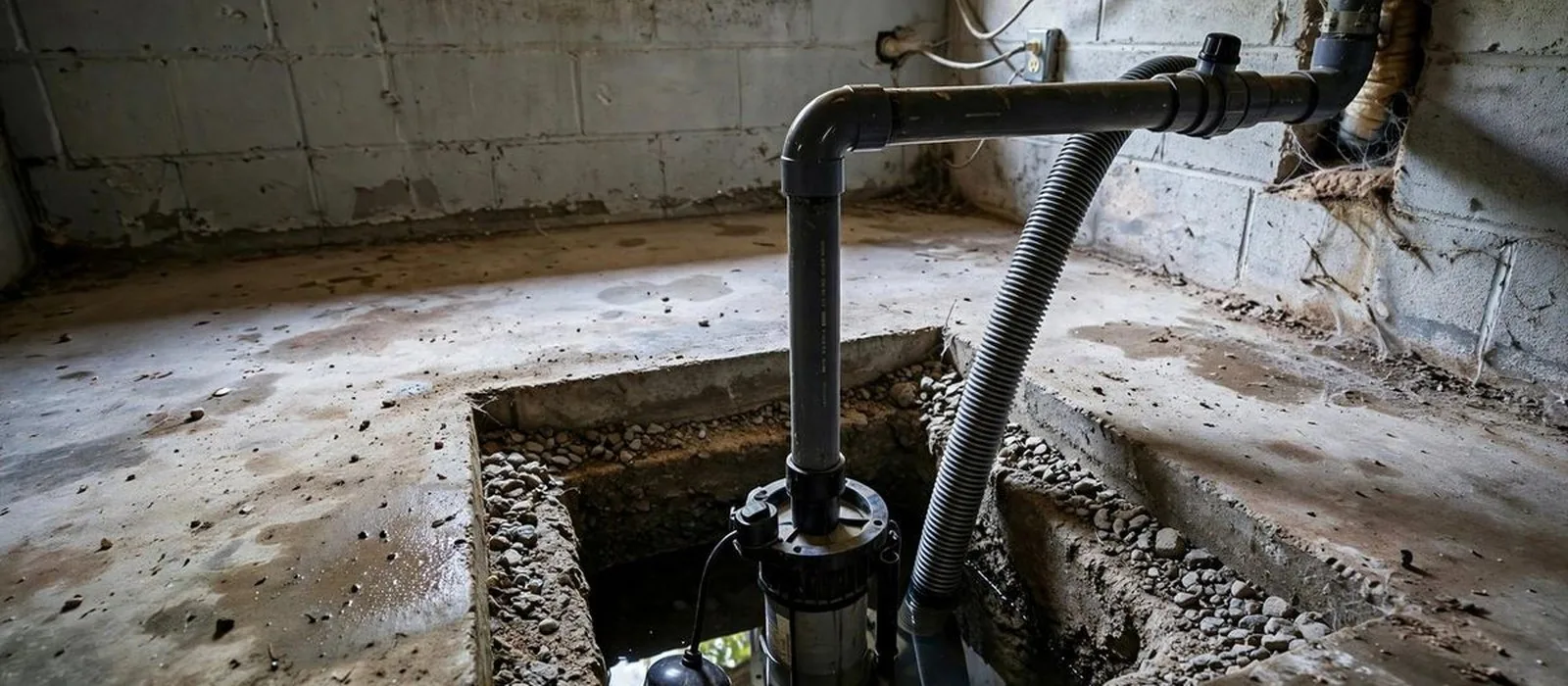
A sump pump moves water out before it reaches your floor
.A sump pump sits in a pit below the basement slab, collects groundwater from drain tile and pumps it outside. Putting in a new pump is a common project here because so much of the city sits near lakes and wetlands. Done right, the system runs quietly for years and you rarely think about it.
Done badly, it fails during the one storm that matters. The pump itself is only part of the job. The pit, the check valve, the power supply and the discharge route decide whether the whole system works.
Pedestal or submersible: picking the pump
.| Feature | Pedestal | Submersible |
|---|---|---|
| Where the motor sits. | On a column above the pit. | Inside the pit, underwater. |
| Noise. | Louder, since the motor is exposed. | Quieter, muffled by water and the pit. |
| Handles debris. | Less well, intake is near the bottom. | Usually better, though grit still wears it. |
| Service access. | Easy to reach. | Must be lifted out of the pit. |
| Typical use. | Narrow pits and tight budgets. | Finished basements and heavier duty. |
Neither type is the right answer for everyone. A narrow older pit may only allow a pedestal. A finished basement often justifies a submersible so you do not hear the motor through the wall. Whichever you choose, size the pump to the inflow, not the horsepower on the box.
The pit, the liner and the lid
.The pit is a liner set into the slab, often a plastic or fiberglass basin with a sealed lid. It should be deep enough for the float to rise and fall without hitting the sides. A gravel bed under it helps drain tile feed in water freely.
A sealed lid matters for two reasons. It keeps radon and humidity from venting into the house, and it stops children and pets from falling in. Ask for a lid with grommets for the discharge pipe and power cord.
If the old pit is cracked, silted or too shallow, replacing it costs more than swapping a pump. It is also the only way to fix a pump that short-cycles because the pit is too small.
Check valve, float and power
.Check valve
A one-way valve on the discharge pipe stops pumped water from running back into the pit every time the pump shuts off.
Float switch
The float tells the pump when to start and stop. A tethered float needs clearance so it cannot jam against the wall.
Dedicated outlet
The pump should plug into its own protected outlet, ideally one on a circuit that is not shared with a freezer or other loads.
Air relief hole
A small hole in the discharge pipe below the slab helps prevent an air lock when the pump runs dry.
Test run
Pour water into the pit until the float lifts. Watch the pump start, discharge and shut off cleanly.
Anything electrical beyond plugging in is the job of a licensed electrician, and a plumber will tell you when a new outlet is needed rather than improvise one.
A new pump is judged against the plumbing code from day one. Minnesota uses the Uniform Plumbing Code (UPC) as its starting point, and that model generally expects a check valve and a discharge that leads somewhere approved. The installing plumber confirms what applies.
Where the discharge water goes
.Discharge routing is where most DIY installs go wrong. The pipe should carry water well away from the foundation, so it does not simply cycle back to the drain tile. A few feet is not enough on a flat lot.
Do not tie the sump discharge into the sanitary sewer. That is generally not allowed, because clean groundwater overloads sewer systems and treatment plants. Rules differ by city, so ask your city before connecting anything to a drain.
In a freeze climate the outside end of the line can ice over. A pipe that exits at a low point may refill and freeze solid, blocking the pump. Slope the discharge steadily downhill, add a freeze-resistant outlet fitting and keep the end clear of snow drifts.
Also think about where the water lands. Pumping onto a neighbor's lawn, a public sidewalk or a driveway that ices over creates problems of its own. Walk the route with the installer before the pipe is cut.
Chanhassen's lakes and a county line through the city
.Eleven lakes lie wholly or partly inside a city of 24 square miles. Homes close to a lake, pond or low wetland tend to see groundwater rise sooner after heavy rain or spring melt. A sump system near the shoreline should be sized and powered with that in mind, including a backup source for outages.
About 154 acres of eastern Chanhassen are in Hennepin County, while the rest is in Carver County. For most sump jobs the county line does not change the installation itself, but it can affect which local office you talk to about records and review. Confirm which applies to your address.
A new discharge point, a pit cut into the slab or an electrical change may each carry its own requirement. The Chanhassen building inspections division can say which ones apply, and asking first avoids a re-do.
Battery backup and spring melt
.Storms that flood basements also knock out power. A battery backup pump, or a water-powered backup where the water supply allows, keeps the pit emptying when the main pump cannot run. It is a separate unit that mounts in the same pit with its own float.
Spring melt is the other stress test. Frozen ground sheds water instead of absorbing it, so a basement that stayed dry all summer can see its pump running constantly in March. Test the pump in early spring and again before the first hard rains.
Do not touch plugs or cords while standing in water. Dispatch can send a licensed plumber to get the pit emptying again.
Installing new versus fixing what you have
.A pump that is a few years old, running but noisy, may only need a new float or check valve. That is a repair, and sump pump repair should be the first thing you price. A pump that is badly corroded, humming without moving water or older than its useful life is a replacement.
If the basement keeps getting damp even though the pump works, the problem may lie in the drainage around the house instead of the pump. Basement waterproofing can add interior drain tile or fix exterior drainage, and the two jobs are often done together.
Towns nearby have the same issues with different terrain. Victoria has 13 lakes inside its borders, and Shorewood sits on the south shore of Lake Minnetonka. In both, a pump with a backup plan is a sensible default.
Maintenance that prevents a failure
.- Pour a bucket of water into the pit every few months to confirm the float rises and the pump starts.
- Clean silt and debris from the pit once a year, with the pump unplugged.
- Check the discharge outlet outside after every winter for ice damage or a crushed end.
- Replace the battery in a backup system on the maker's schedule, and test it under load.
- Keep a record of the install date, because pumps wear out on a rough timeline of years, not decades.
Hire only someone you have looked up in the state license search. Pump work falls under the Minnesota plumbing code, so the installer should be licensed or registered.
Sump pump installation questions
.It varies with use, water quality and pump type. Many last several years under steady duty and longer with light use.
Treat the install date as part of the record, and replace a pump showing signs of wear before it fails.
In general that is not allowed, because clean groundwater should not flow into sewer lines meant for household waste. Ask your city before connecting anything, and plan an outdoor discharge route instead.
If your basement floods during storms or power cuts, yes, it is a sensible add-on. A backup pump needs its own float and a battery that is tested and replaced on schedule.
A high water table, spring melt, a leaking line or a stuck check valve can each cause it. A faulty float can also cycle the pump for no reason.
Watch the pit for a day. If water refills it quickly with no rain, have a plumber trace the source.
No. It is easier to service and fits tight pits. It is louder and handles debris less well than a submersible, so it suits some basements and not others.
Not the physical plan, but it can affect which office you contact about records or review. The city's building inspections division can tell you which one covers your address.
Book a licensed plumber through the 24/7 line to match pump, check valve and backup to your pit before the wet season.