
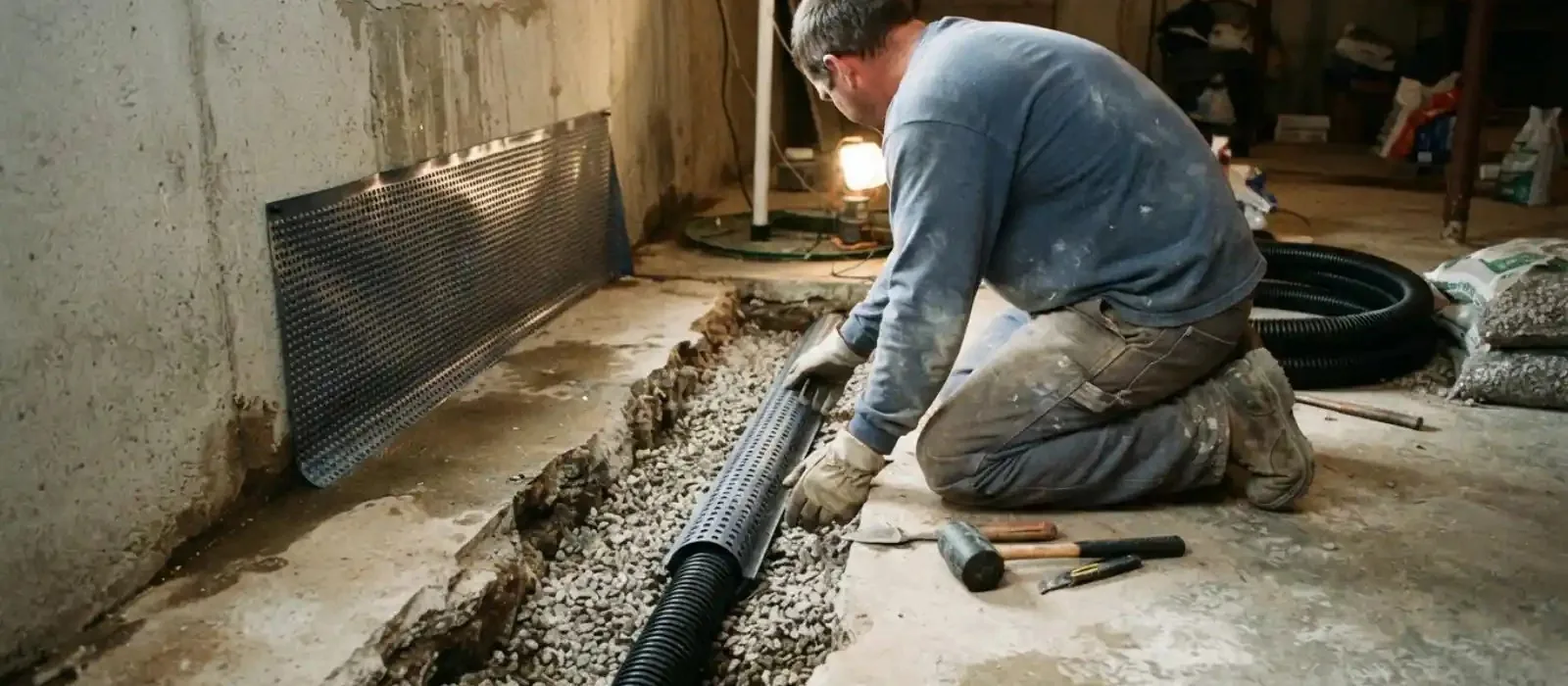
Exterior waterproofing means digging down to the footing
.Exterior basement waterproofing in Chanhassen, MN means excavating along the outside of the foundation wall, cleaning it, coating or wrapping it, and putting drain tile at the footing before backfilling. It stops water before it touches the wall. Interior systems do the opposite, collecting water that has already come through and sending it to a sump pit.
Neither approach is better in every house. Exterior work is the more thorough fix for a wall that leaks through its face. Interior work is far less disruptive and handles most seepage at the floor joint. The choice depends on where the water is entering and what stands between your wall and a backhoe.
Side-by-side: outside dig versus inside drain
.| Question | Exterior waterproofing | Interior drain tile and sump |
|---|---|---|
| Where does the work happen? | Outside, along the foundation wall. | Inside, along the basement floor edge. |
| Disruption. | Yards, decks, shrubs, patios and walkways may be removed. | A strip of floor is cut open, then patched. |
| Stops water at the wall? | Yes, that is the goal. | No, it collects water that entered and carries it away. |
| Best fit. | Cracked or porous walls, failed old coating, blocked footing drains. | Seepage at the floor-wall joint, rising groundwater. |
| Season. | Needs thawed ground and workable soil. | Can be done year-round. |
| Needs a pump? | Often paired with a sump or daylight outlet. | Usually yes, so a sump pit is part of the job. |
Many homes end up with a mix, and basement waterproofing crews often plan both layers together. A dry exterior wall plus an interior sump as a safety net is not unusual in places where groundwater swings with the seasons. Ask a contractor to show you where water enters before agreeing to either one.
What the excavation actually involves
.Locate buried lines
Utility marking comes first. Gas, electric, communication and water lines run near foundations, and none of them should be struck.
Dig to the footing
Soil is removed down to the base of the wall, often 6 to 8 feet in a full basement. The trench needs safe slopes or shoring.
Clean and repair the wall
The wall is cleaned, cracks are patched, and any old tar or coating is assessed.
Apply membrane and add drainage
A waterproof coating or sheet membrane goes on the wall, with a dimpled board or drainage layer and perforated pipe at the footing.
Backfill and regrade
Clean stone or free-draining fill goes near the wall, with the ground sloped away from the house.
The mess is real. Expect heavy equipment, piles of soil and a trench alongside your house for days. Plan around any landscaping, gas meter, air conditioner pad or deck footings that sit close to the wall.
A plumber's role in this work is the drainage side. That means tying the footing drain to a sump pit, setting the pump and check valve, and routing the discharge. Foundation wall structural repair, cracks that are widening, or bowed walls are the job of a structural or foundation specialist, and a good contractor will tell you when to call one.
Call 811 before anyone digs
.Gopher State One Call runs the 811 locate system in Minnesota. Dial it before any digging so buried utility lines get marked. That keeps homeowners and contractors from striking a gas or electric line, and a hand shovel project counts as much as an excavator.
Ask your contractor who is placing the locate request and when. Marks fade, and they are only good for a limited time, so confirm the dig date lines up with the request.
Before the dig is scheduled, check with the Chanhassen building inspections division about what review excavation beside a foundation and new drain connections might need.
Lakes, groundwater and Chanhassen basements
.Eleven lakes sit fully or partly within city limits, Minnewashta and Ann among them, alongside a 500-acre park system. Homes near lakes and wetlands often sit above a higher water table than homes on high ground. That raises the odds of hydrostatic pressure on a basement wall, so a drain system with a reliable pump matters more near shorelines than it does on a hilltop lot.
About 154 acres of eastern Chanhassen lie in Hennepin County, with the rest in Carver County. County lines can change which offices handle some records and review, so a homeowner in the eastern strip should not assume the answers match a neighbor across town. Ask the city which authority applies to the specific address before you finalize the scope.
The city was formed in 1967 and most housing went up after that. Newer foundations tend to be poured concrete rather than the stone and block of much older towns, with perimeter drain tile installed at build. A wet basement in a newer home may therefore be a drain tile or sump problem rather than a failed wall, so check the drain system first before committing to a full dig.
Timing the project around frost and spring melt
.Minnesota winters freeze the ground deep, and an excavation needs soil that can be dug and compacted properly. That pushes exterior projects into the warmer months, and good contractors book up before spring melt. If you notice dampness in March, expect to wait for thaw unless an interior fix can cover the gap.
Late fall is a decent window when the ground is still workable and the season's rain has shown you where the trouble spots are. The downside is a hard deadline ahead of freeze-up, so lock a date early. Backfill that goes in frozen can settle and leave a dip against the wall.
Interior work has no season, which makes it the usual answer for an emergency. If water is coming in tonight, a plumber can stabilize the situation with pumping, drain cleanout and sump work while the longer exterior plan is made.
Move anything valuable off the floor, stay away from wet outlets and call the 24/7 line. A licensed plumber can check the sump and drain side tonight.
How to size up a waterproofing quote
.- Ask exactly where water enters and how the contractor knows. A moisture reading or a visible crack beats a guess.
- Ask what the quote assumes about landscaping, decks, steps and fences, and who restores them.
- Ask who calls 811 and who handles permits and inspections.
- Ask how the drain connects to a sump or daylight outlet, and what happens during a power cut.
- Ask what is included in backfill and regrading, and whether the work carries a written warranty you can read before signing.
Look up every plumber on your job in the state license search. The city's permit page adds that residential contractors need a State of Minnesota license. Get the price in writing before anyone mobilizes.
Neighboring communities have their own soils and lake levels. A basement in Excelsior on the Lake Minnetonka shore deals with different groundwater than one in Victoria, where there are 13 lakes inside city limits. The same principle holds everywhere: find the source first.
Sump systems that keep the water moving
.Most waterproofing leads back to a sump pit. If the pump fails, the best drain tile in the world backs up into the basement. An aging pump, a stuck float or a clogged discharge line are the usual culprits, and sump pump repair is often the cheapest basement protection you can buy.
A battery backup is worth a conversation, since storms that cause high water also knock out power. The pit also needs a clean discharge route away from the foundation and a check valve so the pumped water does not run back.
Exterior waterproofing questions
.Often it is not the first step. Newer homes usually have perimeter drain tile from construction, so a pump problem, a clogged drain or poor grading may be the real cause.
Have someone trace where the water enters before paying for an excavation.
It depends on wall length, depth, weather and what is in the way. A simple run can be a matter of days, while a full perimeter with obstacles takes longer.
Ask your contractor for a schedule in writing and what happens if rain hits the open trench.
Often, yes. Interior drain tile and a sump pit handle many seepage cases, and they work in winter.
Interior systems manage water that has already entered, so a wall that is actively crumbling or bowing needs a structural opinion too.
Yes. Minnesota's one call system covers digging in general, and a shovel can reach a shallow buried line. Request locates before the work starts and wait for the marks.
Not automatically. Water tables vary with soil, slope and distance, so a home away from the shoreline can still have problems, and a home beside Lake Minnewashta may be fine. Look at your own basement history, sump run times and downspout drainage rather than your address alone.
A plumber handles the drain tile connection, sump pit, pump, check valve and discharge. A foundation or waterproofing contractor handles excavation, membranes and wall repair. Structural cracks and bowing walls belong with a structural specialist.
Before you sign for an excavation, ring the 24/7 line so a licensed plumber can inspect your pit, pump and drain connections.