
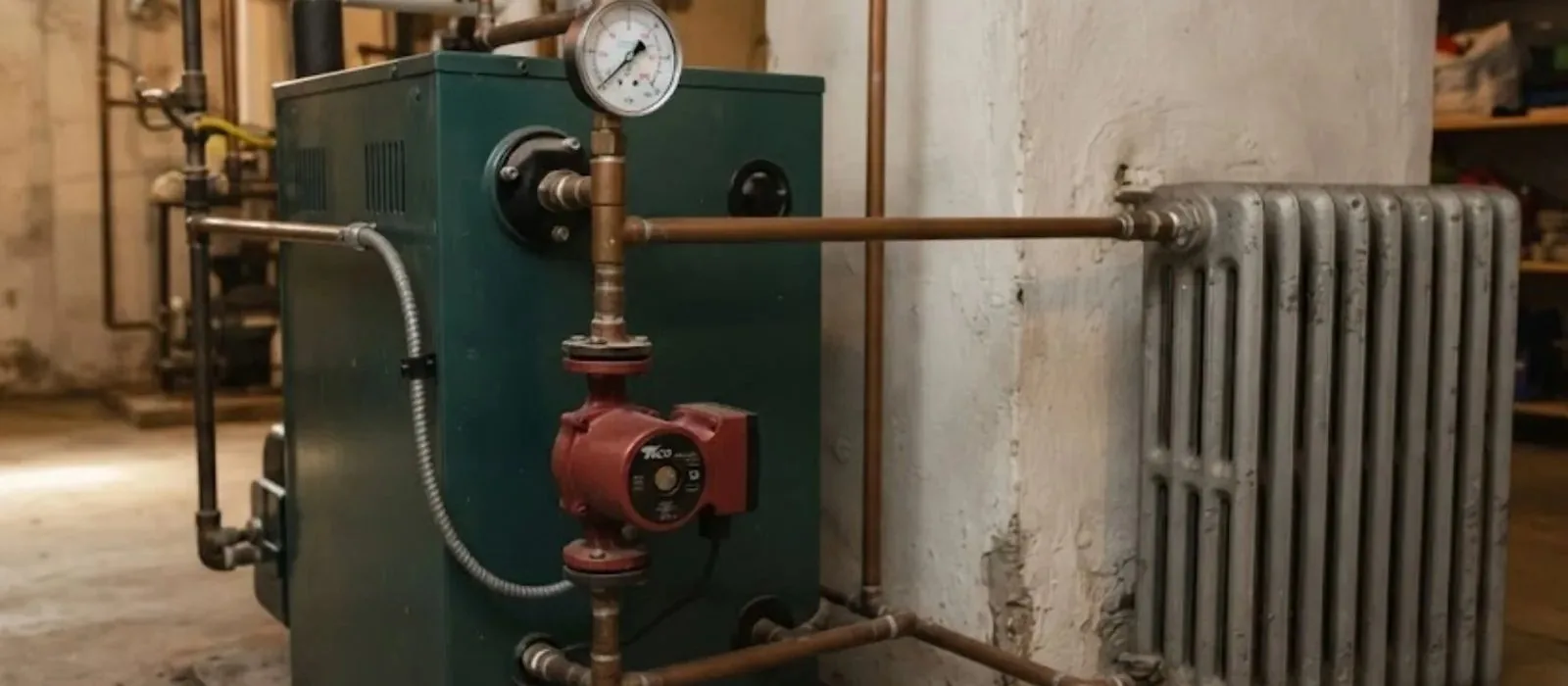
A valve that opens on purpose
.A boiler safety valve repair call is never about a nuisance part. The valve is the last line of defense against pressure. Hot water expands as it warms, and a closed loop of heating pipes has nowhere for that extra volume to go except into the expansion tank or out of the relief valve.
On most residential hot water boilers the valve is rated to open at around 30 psi, but the number stamped on the tag is the one that counts. When it lifts, it sends water or steam out of a discharge pipe, usually toward the floor or a drain. That is the design. The problem is why it had to.
Dripping, spitting and discharging are different
.A faint drip from the end of the pipe means something. A steady stream means more. And a burst of steam or scalding water means you should step away, keep children and pets back and call for help.
| What you see | What it often means | Urgency |
|---|---|---|
| Damp or white crust at the valve outlet. | Seat is worn or scaled, valve weeping slowly. | Schedule a visit soon. |
| Steady drip, gauge reads high. | Overpressure, often from an expansion tank problem. | Call the same day. |
| Water runs only when the boiler heats. | Expansion tank has lost its air charge or is waterlogged. | Call soon, do not ignore. |
| Sudden discharge of hot water or steam. | Overpressure or overheating. | Emergency, keep clear and call. |
| Valve dry but gauge near zero. | Low pressure, a different problem. | Still needs service. |
Three reasons the pressure climbs
.The expansion tank is no longer absorbing growth
.A diaphragm tank has a cushion of air on one side. When the cushion leaks away or the diaphragm tears, the tank fills with water and stops absorbing expansion. Pressure then spikes every time the boiler fires, and the relief valve takes the heat. Tapping the tank can reveal it. A healthy one sounds hollow at the top and solid at the bottom.
The fill valve is feeding too much water
.An automatic fill valve tops up the system to a set pressure. If it fails or leaks past its seat, it keeps adding water, and pressure creeps up with each cycle. The sign is a gauge that climbs even when the boiler is cold.
Debris is holding the valve open
.Rust flakes and mineral scale can lodge on the seat so it no longer closes tightly. In that case the system pressure may be normal and the valve still drips. Lifting the test lever sometimes clears the debris, but a valve that has dripped for a while usually needs replacing.
Cold snaps and the weather office in town
.The National Weather Service Twin Cities office is in Chanhassen, so a freeze warning is often issued from your own neighborhood. Treat that forecast as a cue to look at the boiler gauge, the valve outlet and the pipes in any room that sits on an exterior wall before the cold arrives.
Boilers run longest when it is coldest, which is also when a marginal expansion tank or a seeping valve is most likely to give up. A quick check before the cold arrives turns a surprise failure into a scheduled repair, and that matters in a town where winter heat is not optional.
What not to do
.- Do not cap, plug or tighten down the discharge or the valve.
- Do not run the discharge pipe uphill or into a closed container.
- Do not reduce the discharge pipe diameter or add a valve to it.
- Do not keep opening the test lever to see whether it still drips, since each lift can leave debris on the seat.
- Do not put your hands near the discharge during a venting event. The water can be scalding.
If the valve discharges hot water suddenly, step away from the boiler, shut off its power switch if you can reach it safely, and call for help. A gas smell or a flame that looks wrong means stepping outside and calling the gas utility or 911 ahead of any repair call.
Shut the boiler's power switch if it is safe to reach, keep everyone back from the discharge pipe and call the 24/7 line. A licensed plumber can find the pressure source.
How a plumber approaches the repair
.The visit starts with the gauge and the system's cold and hot pressure readings. The plumber checks the expansion tank's air charge, the fill valve, the age of the valve and the discharge pipe routing. Often the valve is the symptom and the tank is the cause, so swapping the valve alone would bring the drip back within a season.
A boiler relief valve carries code expectations too. In the Uniform Plumbing Code (UPC) model, a discharge pipe generally ends somewhere safe and nothing may be installed that could block the valve. Boilers can also fall under other codes, so the plumber confirms which one governs.
When the valve is replaced, the new one must match the boiler's rating and the pipe must be terminated within code. The state plumbing code governs that termination, and the Chanhassen building inspections division can say whether a valve swap on your system needs review.
Boiler repair work covers more than the valve, including circulators, zone valves and controls. A plumber does not do combustion tuning or gas train work unless licensed for it, so ask who handles burner service. Water heaters carry similar valves, and a tank that drips at the relief outlet may call for water heater repair on the same visit.
Towns around Chanhassen see the same pattern
.Dispatch runs from Chanhassen to the lake towns on the north shore, where many older homes still heat with hot water boilers. In Shorewood, some homes use private wells, which can add sediment to a heating loop's fill water. In Excelsior, Victorian-era houses often have boilers that have been patched over many decades, so valve seats and old piping deserve extra attention.
Whatever the town, the first move is the same. Read the tag on the valve, write down the pressure on the gauge and take a photo of the discharge. Those three details speed up the diagnosis.
Simple habits that keep the valve quiet
.- Check the gauge monthly in heating season, and note the normal cold and hot readings.
- Have the expansion tank's air charge checked on a service visit.
- Keep the area around the discharge pipe clear so you notice a drip early.
- Replace the valve when it is old, even if it still seems fine, since seats wear out silently.
- Book annual boiler service before the first cold stretch.
Questions about boiler safety valves
.It is the last line of defense against too much pressure. When pressure inside the boiler climbs past the valve's rating, a spring-loaded disc lifts and lets water or steam out through a discharge pipe. Residential hot water boilers commonly use a valve rated for 30 psi, but check the tag on your own valve.
The usual causes are system pressure that runs too high, a failed or waterlogged expansion tank, or debris and mineral deposits on the valve seat so it no longer seals. Sometimes the valve is simply old and tired.
A plumber will check the gauge, the tank and the fill valve before blaming the valve.
No. Plugging the discharge or tightening the valve closed removes the safety device. A boiler that cannot vent excess pressure can rupture. Leave the valve alone and call a licensed plumber.
It should be replaced by licensed work. The new valve must match the boiler's rating, the discharge pipe must be routed and terminated correctly, and the boiler has to be drained, refilled and bled. Confirm the plumber's license in the state labor department's lookup first.
Yes. The National Weather Service Twin Cities office is based in Chanhassen, and when its forecast calls for a hard freeze, your boiler is about to run longer and harder. A pre-cold check of pressure, valve condition and zone operation costs little compared with a midwinter failure.
Follow the boiler maker's instructions, which often call for a gentle lift of the test lever once a year with a bucket or pipe in place. If water keeps running after you release it, the seat is likely fouled and the valve needs replacing.
Read the tag and the gauge, then tell the dispatcher what you see. A licensed plumber can tell a failed valve from an overfilled tank or a bad fill line.