
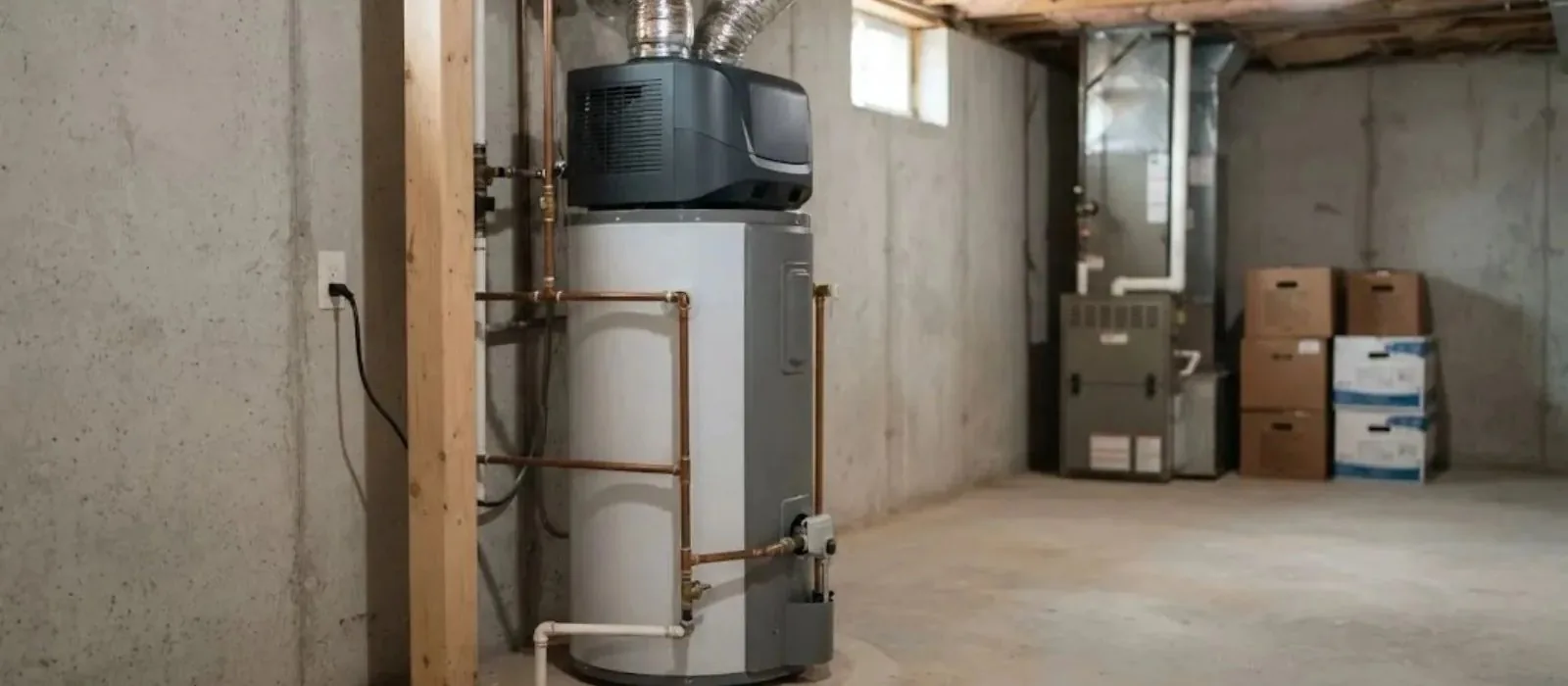
Where the money actually goes on a gas tank swap
.Three things set the final bill for a 50-gallon gas heater here: the venting the new unit needs, how much gas piping and flue can stay, and what your local inspector expects. The tank is the easy part to price. The work around it is where two quotes drift apart.
A like-for-like swap into a clean, correctly sized flue is the short end of the range. A conversion to a different vent type, a corroded flue or an undersized gas branch pushes the job toward the long end. You can learn which one you have in a ten-minute look at the basement.
Atmospheric, power vent or direct vent
.Venting category is the single biggest swing. An atmospheric unit uses a metal flue that rises on natural draft, the way most older gas tanks work. A power vent uses a blower to push exhaust out through plastic pipe, and a direct vent unit pulls combustion air from outside through a second pipe.
Power and direct vent models cost more as equipment and need an electrical outlet nearby and a wall or roof penetration. In return they free you from a tall chimney path and can run in tighter rooms. Your plumber should tell you which category fits the space before quoting.
| Vent type | How exhaust leaves | What adds to the job | Good fit when |
|---|---|---|---|
| Atmospheric. | Natural draft up a metal flue. | Flue condition, draft test, correct pitch. | A sound chimney or flue already exists. |
| Power vent. | Blower pushes it through plastic pipe. | Electrical outlet, wall penetration, longer pipe runs. | No usable chimney or a long horizontal run. |
| Direct vent. | Sealed, outside air in and exhaust out. | Two pipes through the wall, termination clearances. | Tight rooms or sealed utility closets. |
| Condensing high-efficiency. | Cool exhaust through plastic with a condensate drain. | Drain path for acidic condensate, neutralizer. | Efficiency is the priority and a drain is close. |
Gas line, sediment trap and the flue you inherit
.Gas work is where a plumber slows down. The branch line needs to be sized for the new burner, the shutoff has to be reachable, and a sediment trap (a short vertical drop at the appliance) is usually part of a clean install. If an older line is undersized or the connector is past its life, that gets replaced during the swap.
The flue is the hidden variable. A rusted, sagging or poorly pitched flue pipe has to be corrected, since leaking exhaust is a carbon monoxide risk. A gas smell near the heater means getting everyone out and phoning the gas utility or 911 before you think about a plumber.
What moves the installed cost of this job
.No honest number can be given without seeing the room. These are the line items that separate a simple swap from a larger one.
Homeowner's insurance generally pays for sudden damage like a burst tank, not for replacing a heater that simply wore out. Ask your agent how your policy treats a failed tank before you file anything.
Tell dispatch what vent and gas line you have and a licensed plumber can scope the job. The number you approve is stated up front, ahead of any work.
Does a 50-gallon tank make sense, or would 40 do?
.Tank size is a tradeoff, and bigger does not always win. The number that matters more than the label is the first-hour rating, which is the volume of hot water a unit can deliver in its first hour of heavy use. It is printed on the yellow energy label.
A household of two or three with one bathroom running at a time may be fine on a 40-gallon tank. A family that stacks showers, runs the dishwasher and does laundry in the same morning usually wants the 50. Count your busiest hour, not an average day.
Gas units recover faster than electric ones, which is why a 40-gallon gas tank often performs like a larger electric. Ask your plumber to compare first-hour ratings side by side rather than assuming more gallons means more hot water.
Tell dispatch what the heater, flue and gas shutoff look like, and a licensed plumber can outline the job before you choose a model.
Relief valve discharge and other code details
.Every tank heater needs a temperature and pressure relief valve with a discharge pipe that ends somewhere safe and visible. State code sets the rules here, and your plumber applies them so you do not have to memorize anything.
Many quote lines for a gas heater trace to Minnesota's model code, the Uniform Plumbing Code (UPC), such as a relief valve, its discharge pipe and sometimes an expansion tank. Inspectors generally look for each of those. Ask the plumber which lines apply to your quote.
Closed water systems may also need an expansion tank to absorb pressure swings, and that is a common add-on line on a quote. Ask whether it is included. If a bid skips it and your home has a backflow device or pressure reducing valve, the question is worth raising.
Basements, winter air and the permit question
.Most Minnesota gas heaters sit in basements, and in winter those rooms get sealed up tight. A gas burner needs a steady supply of combustion air, so a furnace room packed with storage or closed off with a new wall can starve the heater. Keep the area around it clear and tell your plumber if the room was finished after the original install.
Chanhassen sits in a cold climate where the heater works hardest from November through March, when the incoming water is at its coldest. That longer recovery time is a reason to check the first-hour rating rather than just the tank size.
Whether a swap needs a permit is a question for the Chanhassen building inspections division. A licensed plumber will normally know the local steps, and the state labor department's license search lets you confirm who you are hiring.
Reading a quote line by line
.Put two quotes side by side and compare what each includes, not the bottom line. A low bid that leaves out the flue repair, the expansion tank or the permit is not low at all, only incomplete.
- Is the venting type named, and does it match the existing flue or the plan for a new one?
- Does it include a new gas connector, shutoff and sediment trap?
- Is the relief valve discharge pipe included, and where does it terminate?
- Are removal and disposal of the old tank listed, along with any permit steps?
- What does the manufacturer's coverage actually cover, and who handles a claim?
If you serve a home farther out, say near Victoria or the lake shore at Shorewood, a plumber can still handle the same checklist. Distance changes the schedule, not the scope.
When the existing heater is already past its useful life, a planned replacement beats an emergency one at midnight. If you are moving the unit or converting the vent, a full installation visit is the better description of the work.
50-gallon gas heater cost questions
.Usually the difference is scope, not the tank. One bid may include a new flue connector, sediment trap, expansion tank and permit steps while the other leaves them out.
Ask each plumber to list venting, gas piping, relief valve discharge and disposal on paper, then compare line by line.
Often yes, if there is an outlet nearby and a route for plastic vent pipe through a wall or rim joist. It changes the job from a swap to a small build, so the quote will reflect it.
A plumber can walk the basement and tell you whether the route is practical.
No. The first-hour rating on the energy label tells you more about real performance than the gallon count. A well-matched 40 can beat a poorly matched 50 for a small household.
Get everyone out and phone the gas utility or 911 from outside the house. Do not flip switches or light anything.
A plumber should only come in after the utility says the building is safe.
It depends on the project, and the Chanhassen building inspections division is the office to ask. Its permit page says residential contractors need a State of Minnesota license.
Any plumber can be looked up in the state labor department's license search.
Coverage depends on your policy. Most pay for sudden water damage from a failure but not for replacing a unit that wore out. Photograph the old tank and keep your paperwork, then ask your agent.
Call the 24/7 line, describe your heater and flue, and get a plain price for the work before the first wrench turns.