
The first minutes after you spot water where it shouldn't be
.Shut the water off before you do anything else. Find the main shutoff valve, usually where the supply line enters the house near the meter, and turn it fully. A quarter-turn ball valve closes when the handle sits across the pipe. A round gate valve closes by turning clockwise.
Once the supply is closed, open the lowest tap you have so the pipes drain and the pressure drops. Then deal with the electrical and the mess. The order matters, because every minute the supply stays open adds more water to the damage.
Close the main valve
Turn the main water shutoff all the way. If the valve is stuck, do not force it with a wrench until you have another plan.
Open the lowest tap
A basement sink or outdoor spigot drains the line and eases pressure at the break.
Kill the power if water is near it
Only switch off the breaker if you can reach the panel while standing on dry floor. Otherwise stay back.
Photograph everything
Take wide and close shots of the leak, the damage and the shutoff before you move or clean anything.
Call a plumber
Describe where the water is, how fast it is moving and whether the shutoff worked.
Water and electricity: keeping people safe
.Standing water near outlets, appliances or a panel is a shock risk. Do not step into a flooded basement if the water reaches outlets or the panel. Call the utility or an electrician to cut power from outside, and wait.
A ceiling that sags with trapped water can drop without warning. Place a bucket underneath, poke a small hole to relieve it only if you can do it from a safe angle, and keep away from the area otherwise. Where a light fixture is wet, leave it off.
If the main valve is closed and water is still running, call the 24/7 line right away and tell dispatch what you can see.
Where the water is telling you to look
.| Where you see it | Common source | What to try |
|---|---|---|
| Ceiling stain or drip. | Supply or drain line above, tub or shower overflow. | Shut off water, check the room above. |
| Damp wall or bubbled paint. | Pipe inside the wall or a leaking fitting. | Close the main and watch whether it dries. |
| Wet floor under a sink. | Supply line, trap or faucet fitting. | Close the angle stop, then check the connections. |
| Wet spot on a slab or carpet. | Slab leak or a leak under the floor. | Shut off water and call for detection. |
| Meter dial moves with taps closed. | Active leak somewhere downstream. | Close the main and see if it stops. |
| Soggy yard near the line. | Service line leak. | Shut off at the curb or main and call. |
Why you photograph before you mop
.Insurance adjusters work from evidence. Wide shots of the room, close shots of the source and photos of any wet belongings all matter. Write down the date and time you found the leak and what you did to stop it.
Keep damaged materials until the adjuster has seen them, unless they pose a hazard. Save receipts for fans, rental equipment and plumbing repairs. If the plumber replaces a failed part, ask to keep it.
Meters, curb stops and Minnesota winters
.Chanhassen's water is a city utility, and city water production staff can answer questions about the meter and the supply side of your service. If the leak looks like it is outside the house or at the meter itself, call them as well as a plumber. That keeps you from paying for a repair that belongs to the utility.
Learn where your main shutoff is before you need it, and find the curb stop too. The curb stop is the city-side valve near the street and is normally not for homeowners to operate, but knowing where it is helps in an emergency.
A cold Minnesota winter is when many leaks happen. Frozen pipes split and the leak begins as the ice thaws. If the temperature is dropping, open cabinet doors under sinks on exterior walls and keep a trickle running at the farthest tap. Where the ground is frozen, finding a service line leak can take longer.
Homes on a well versus city water
.Not every home draws from a city main. Some homes near Shorewood use private wells, and there the shutoff may be at a pressure tank rather than a meter. If you have a well, switch off the pump breaker as well as closing the house valve, or the pump will keep pushing water at the leak.
Property in Victoria and surrounding towns varies too. Ask whether your water comes from the city or a well, because that decides who to call about meter-side problems and how you isolate the system.
Drying out and keeping mold away
.Moisture lingers in drywall, insulation and carpet padding. Mold can start within a day or two in damp materials, so speed matters. Run fans, open windows if the weather allows and use a dehumidifier once the leak is stopped.
Wet drywall that has been soaked for days, or insulation that stays damp, often needs to be cut out. A mitigation company handles the drying and a plumber handles the pipe. Do not paint over a stain until the cause is fixed.
Finding the leak and fixing it for good
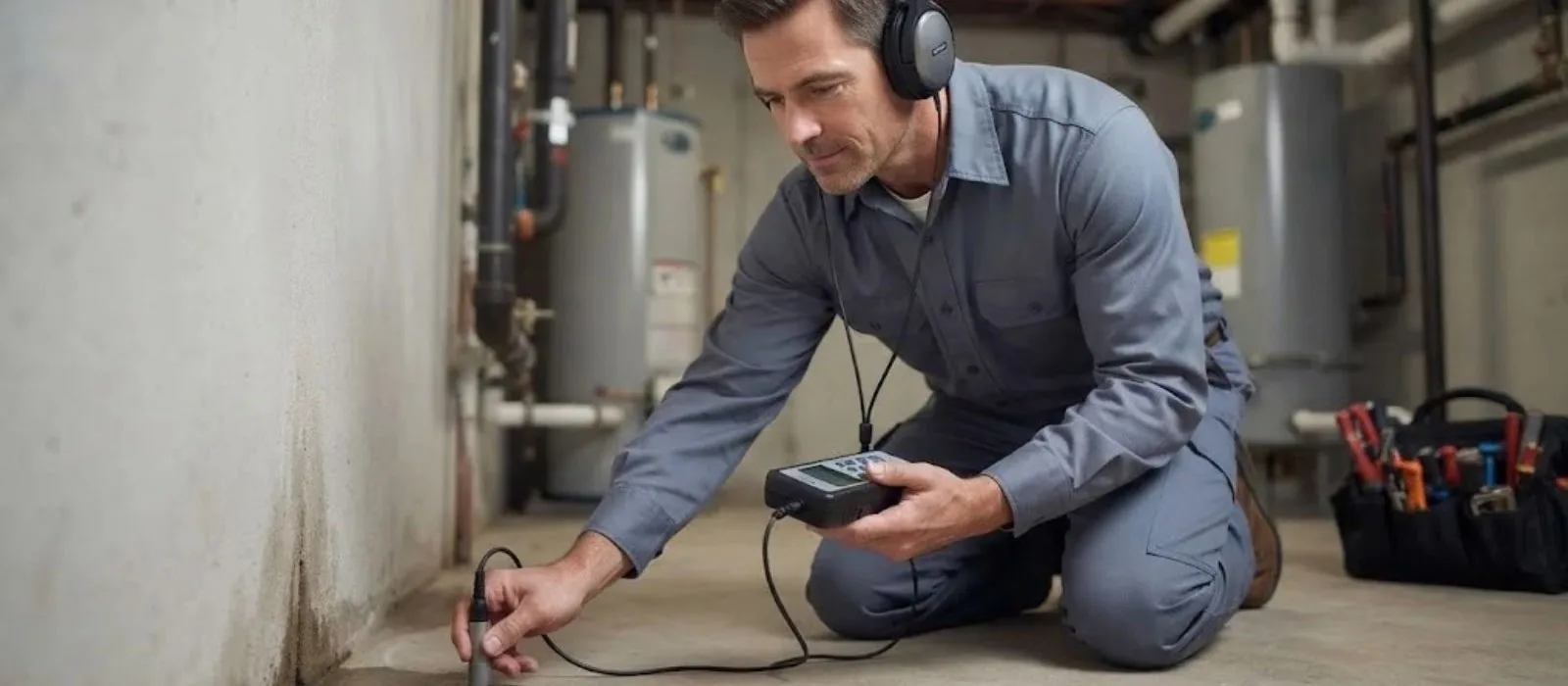
.Some leaks are obvious, like a split supply line under a sink. Others hide behind walls or under slabs. Finding a hidden leak can call for listening equipment, a thermal camera, tracer gas or a pipe camera, and the choice depends on the pipe material and where it runs. Ask which method suits your case.
A lasting leak repair uses approved pipe and joints, which is a code matter. Minnesota's plumbing code stands on the Uniform Plumbing Code (UPC). On the repaired section, inspectors generally look at materials and workmanship, and your plumber tells you what a permanent fix involves.
Once located, the repair is usually a section of pipe or a fitting replaced. For a pipe that has split or burst, burst pipe repair is the right category, and for a leak that is not yet located, leak detection comes first.
Water leak questions
.Usually where the water line enters the house, often in the basement near the meter or a utility room. Look along the wall that faces the street.
Find it and test the handle now, so you are not learning in an emergency.
Only when the panel sits on dry ground you can walk to safely. If the panel is wet or the floor is flooded, stay out and call the utility or an electrician.
Close the main valve and check the meter. If the dial keeps moving, the leak is between the meter and the valve, which means the service line. If it stops, the leak is inside the house.
Coverage depends on the policy. Sudden leaks often are covered for resulting damage, while slow leaks and wear usually are not. Report quickly and document well.
Ask your agent what counts as sudden under your policy.
Call Chanhassen's city water production staff about the meter and the supply side, and a plumber for anything on your side of the valve. If you are not sure which side it is, tell both what you see.
Take a photo of the leak first.
Mold can begin in damp materials within a day or two, so start drying quickly. Fans and a dehumidifier help, and soaked drywall or insulation may need to come out.
Ring the 24/7 line to have a licensed plumber trace the source and repair it before the damage spreads.