
How a failing sewer lateral gives itself away
.A damaged sewer line shows up as a pattern, not a single event. Drains that slow down everywhere, toilets that gurgle after the washer runs and backups that return after each cleaning are all clues. A camera inspection of the line confirms whether the pipe is cracked, offset, root-filled or collapsed.
One clog is a clog. The same clog three times in a year is a pipe telling you something. Treat the repeat as the signal and stop paying for temporary fixes.
| Sign | What it can mean | How it gets confirmed |
|---|---|---|
| Gurgling from drains or toilets. | Air pushed through a partial blockage. | Cable test, then camera. |
| Repeated backups after cleaning. | Roots, a belly or a broken joint. | Camera inspection. |
| Sewer odor indoors or in the yard. | Cracked pipe or a dry trap. | Smoke or camera test. |
| Lush strip or soggy patch in the lawn. | Leaking wastewater feeding the grass. | Camera and locator. |
| Floor drain backs up first. | Main line restriction. | Camera from the cleanout. |
| Sinkhole or sunken spot. | Washed-out soil around a failed pipe. | Locate and expose the line. |
Inside the house and out in the yard
.Inside, listen for bubbling in the toilet when the shower drains and watch the lowest drain in the house. Water finds the easiest way out, which is usually a basement floor drain or a tub. That is where a main line blockage shows itself first.
Outside, a strip of unusually green grass or a spongy spot along the path of the lateral can mean sewage is leaking into the soil. A persistent smell near the yard or foundation is another hint. Photograph anything you see with the date and keep your notes.
Camera first, then the repair decision
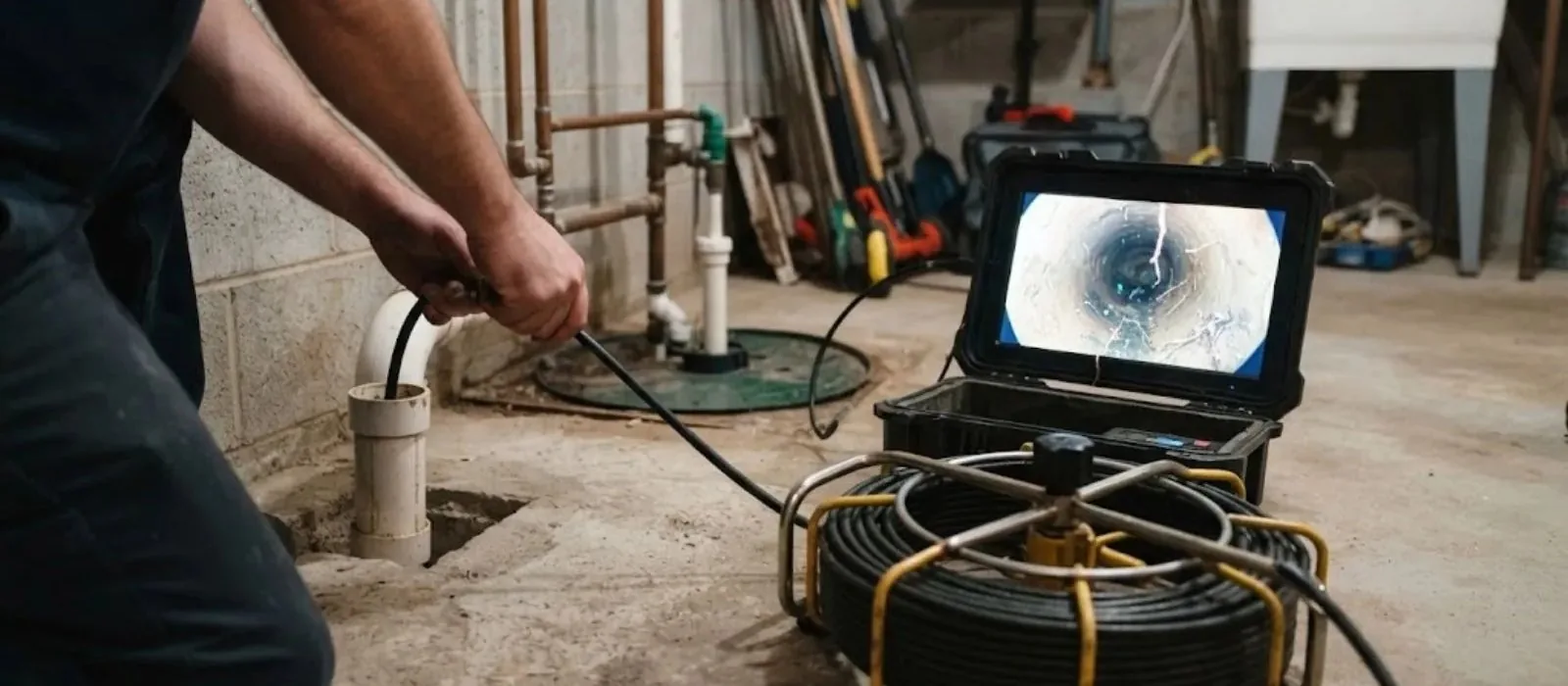
.A small waterproof camera on a flexible cable is fed through the cleanout or a pulled toilet. It records the pipe from the house toward the street, shows the material and joins and marks where problems sit. A locator can then trace the signal from above ground so a repair can be targeted. See what a sewer inspection actually involves before you commit to digging.
Ask for the footage. A good report shows the damage, the distance from the cleanout and the depth, so the repair can be scoped without guessing.
Call the 24/7 line and describe how often it happens. If sewage is coming up inside right now, say so and dispatch will treat it as urgent.
The repair paths, from small to large
.The right fix depends on what the camera finds. A short broken section can be dug and replaced as a spot repair. A pipe with cracks or roots but a still-intact shape may be a candidate for relining, where a resin liner is cured inside the old pipe. Pipe bursting pulls new pipe through the old path while breaking the old one apart. A collapsed or badly offset line usually needs open excavation.
- Spot repair: best when damage is limited to one location and the rest of the pipe is sound.
- Relining: fits cracks and root intrusion where the pipe is still round and continuous.
- Pipe bursting: replaces whole runs with less surface digging, if access points exist.
- Open-trench replacement: needed when the pipe has collapsed or has sagging sections that hold water.
None of these is universally best. Ask your plumber why a method fits your pipe, what it cannot fix and what restoration of the lawn or driveway looks like. For the full picture of options, see our page on sewer line repair.
Ownership, 811, frost and trees
.Who owns which stretch of the lateral varies from one city and property to another. In many places the homeowner is responsible from the house to the main in the street, but not always. Ask the city of Chanhassen who owns the line on your lot before you pay for a repair. That answer decides who calls the contractor and who pays.
Before anyone digs, Minnesota requires locating buried utilities through Gopher State One Call. Call 811 and the marking is done at no cost to you. Skipping it risks striking a gas line or a cable buried near the sewer.
Freezing ground makes winter excavation slower, and frost can heave and shift old joints. Trees add another layer: roots are drawn to the moisture escaping from a small joint gap and can widen it over a few seasons. If a mature tree stands over the line, tell your plumber so the camera can look for root intrusion.
What to do while a backup is active
.Stop running water. Every shower or load of laundry adds to what has nowhere to go. Keep children and pets away from the affected area, since sewage carries bacteria and should be handled with gloves and boots.
Let fresh air in through open windows. Cutting power to a flooded basement is safe only when the panel is dry and you can reach it without wading. If water is near outlets or the panel, call an electrician. Then call dispatch so a plumber can clear the line and take a look.
Paperwork that helps your insurance claim
.Insurance for sewer problems depends on your policy. Many standard homeowner policies exclude sewer backup unless a rider was added, so read the language before assuming. Take dated photos of damage, keep the camera footage and save receipts for cleanup and repair.
Ask your agent about both the line itself and the water damage. Those are often treated differently. Crews dispatched from Chanhassen also work toward Chaska and the lake shore at Excelsior, where older neighborhoods can have older laterals.
Damaged sewer line questions
.A clog usually clears and stays cleared. Damage tends to return, often within weeks or months, and may come with a wet yard or odor.
A camera shows the answer directly.
Roots seek moisture and enter through small gaps at joints. Over time they grow into a mass that blocks flow and widens the opening. A cable can cut them back, but the gap remains until the pipe is repaired or lined.
It depends on your policy and the cause. Many standard homeowner policies exclude sewer backup unless a rider was added, and wear or root damage may be treated as maintenance. Ask your agent before work begins.
No. Depending on the damage, relining or pipe bursting may reduce digging. A collapsed line often does need an open trench, so the camera findings decide.
Ownership varies by lot and by city, so ask the city of Chanhassen before paying for a repair. In many places the homeowner is responsible for the pipe on their own property, but the connection point can differ.
Get the answer in writing if you can.
Call the 24/7 line, mention the signs you have noticed and ask a plumber to schedule a camera run before any digging starts.